
Skip to content

eChatter

Social Media Investigations & OSINT

Category: General Social Media Information

Should Schools Monitor Social Media 
For Threats?


Should Schools Monitor Social Media 
For Threats?


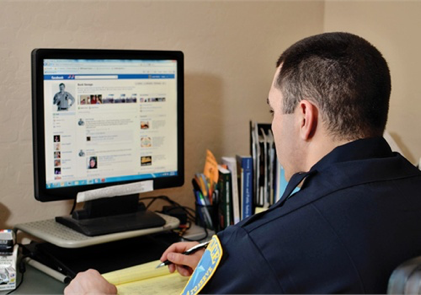
More and more schools are now hiring online security companies to scan social media for threats…take Orange County Schools for example. They just hired a social media investigation company who will monitor public social media content, flag possible threats and notify school officials of threats against school students, staff, and events, according to an OCS press release. The service, which will cost the school district about $10,000 a year, will look for keywords in social media that may post a threat to students, staff, or the local community.

Orange County Schools’ Superintendent Todd Wirt said students, parents, and staff are acutely aware of the need for implementing as much safety and security as possible in the school community. “When we find ways to secure our schools – whether it’s building safety measures into our schools or responding to online threats – we want our families to know that the safety of our students and staff is the top priority,” Wirt said.

The OCS statement said an administrator would conduct social media screening, review any red flags in context to determine the “type and severity” of any potential threats, and start working with law enforcement. OCS officials did not say what constitutes a threat, how data will be stored, or what role law enforcement will play.

With the 2017-18 school year going on record as the deadliest school year in decades, school leaders are trying to figure out how to prevent more school tragedies. The need to protect the lives of students and teachers has caused school districts to examine a number of solutions, including the increased monitoring of online threats, social media background checks, and consulting with social media intelligence experts.

monitoring the web

These programs look for keywords that indicate threats of violence to others or self-harm. Those in favor of the program say that such measures reduce threats and prevent potential suicides, however, critics of social media screening point to possible violation of privacy concerns, potential human rights violations, and the possible misuse of such monitoring by schools to target students of color.
But in the war against potential threats, monitoring of keywords in public posts may be a way schools can be proactive. As Stephen Halkiotis, the chairman of the Orange County Board of Education said in response to criticism that the service is an invasion of privacy, “I think you give up your privacy when you decide to put your heart’s feelings, whether they’re positive or negative, on the Internet.”

The Cons:

Social media can contribute to psychological trauma and other challenges. Potential risks include the following.

• Cyberbullying or other online conflicts
• Quick and widespread communication of crisis-related rumors, false information, or
embarrassing and inappropriate information
• Potential for triggering crises, increasing perceptions of threat and fear, or creating crisis
contagion
• Affects privacy
• Potential for overuse or as a consistent substitute for face-to-face socializing
• Time consuming for educators, parents, and other caregivers to learn and monitor

The Benefits:

While social media screening can bring about challenges that are concerning, social media is a reality that is here to stay. Educators are encouraged to understand how social media can help prevent and respond to crisis risks by addressing the following:

• CRISIS PREVENTION
• Helping to create an extended sense of community or culture
• Encouraging positive behavior, responsibility, and healthy relationships in schools, homes,
and in the community.
• Conducting online surveillance (e.g., monitoring crisis warning signs or threats; for example,
Facebook has partnered with the National Suicide Prevention Lifeline to create a suicide
reporting mechanism).

• CRISIS INTERVENTION
• Quickly communicating accurate information following a crisis.
• Rapidly dispelling rumors or other false information.
• Evaluating individuals who may be affected by a crisis situation
• Quickly disseminating information about how others can access mental health resources
following a crisis.
• Quickly coordinating crisis response efforts.

• Create and/or understand social media policies. Schools and community organizations are
encouraged to create and communicate social media policies. Parents, caregivers, and others in
the community can familiarize themselves with such policies.

• Prioritize ongoing social media training, both formal and informal. Research related to how
social media and crises interact is limited. Social media platforms and applications also
evolve quickly. Stay informed about current social media being used by youth and adults in
your community. Youth in the community can take on the role of cultural brokers by informing
educators, parents, and other adults about what and how social media are being used.

About Us:
We have been mining social media since 2007 for our clients. By utilizing best in class software programs, we offer a service called eChatter.
eChatter works with you to obtain your objectives in a fast, accurate and reliable facet. By keeping our strengthened principals, yet evolving with this industry, we lead in social media monitoring. Since 2007, we have been dedicated to providing our customers with the most authentic data.

We offer:
• Deep Web Scans
• Jury Vetting
• Jury Monitoring
• Quick Scan

www.e-chatter.net
(866) 703-8238
Author eChatterPosted on July 18, 2018Categories General Social Media Information, Parents CornerTags school social media, schools monitoring social media, social media monitoring, social media threatsLeave a comment on Should Schools Monitor Social Media 
For Threats?


Tools and Recommendations for Social Media Investigations

Tools and Recommendations for Social Media Investigations

Think social media is just for catching up with friends, sharing recipes, and watching funny videos? Think again! Using the social web has become an integral part of work for investigators. So much information is shared with smartphones and social media that it’s absolutely impossible to ignore. And the amount of data is growing every day. We’ve compiled a list of tools that can help with the process.

Reverse Image Search

Google’s reverse image search allows you to scour the Internet for any instances in which a particular photo (or similar photo) has been posted on Facebook, Instagram, blogs or anywhere else on the Internet. Cool huh?!?

While it’s not perfect, it can be an incredibly powerful tool if you are trying to find social profiles of individuals or websites in the deep dark web. This can benefit investigators because most people don’t bother changing the profile picture for the various social networks they use, often using the same exact photo and posting the exact same pictures.


Knowem

Do you know that not everyone uses his or her real name on the Internet? Shocking I know! While the person you are searching for may go by James Rogers in real life, he may go by MrFalcon001 on the Internet. While this makes people more difficult to track down, one thing we have going for us is that people are creatures of habit. Once they’ve got a username, they usually stick with it. So if a person is MrFalcon001 on Instagram, there is a good chance that he is MrFalcon001 on many other sites as well.

That’s where Knowem comes in. With Knowem, you can search over 500 popular social networks to see whether that particular name has been taken.

Instagram Search

With more than 200 million active users, Instagram is a phenomenal (and growing) source for investigators. But since Instagram was built as a mobile platform, it doesn’t have a very good “desktop” version to search with. Drum roll…Instagram for Chrome. On your desktop you can search hashtags, GPS tags and user tags in order to develop a full picture of close confidants and groups of individuals who were a regular part of the target individual’s entourage.

Get Involved with Social Media

The best way to know how social media works is to actually use it. Learn how people interact, get attention, post, like/heart/retweet, friend, etc. It’s amazing the amount of information you will uncover.


Author eChatterPosted on March 27, 2018April 6, 2018Categories General Social Media InformationTags deep web, online searches, social media investigations, social media searchingLeave a comment on Tools and Recommendations for Social Media Investigations

Fake Accounts on Social Media

Fake Accounts on Social Media

Facebook admits to as many as 270 million fake or clone accounts


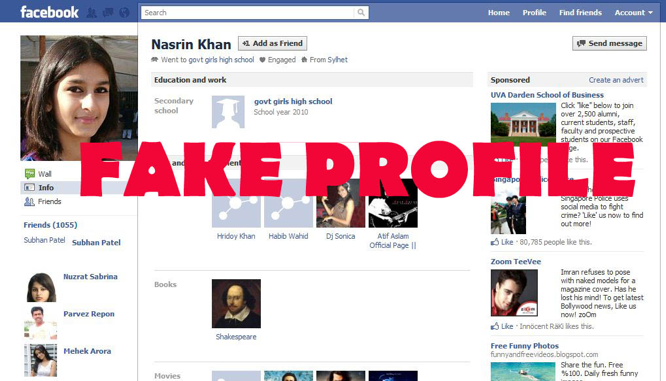
Have you ever had your friends tell you they received a new friend request from you? And then you think…wait, I didn’t send that! You’ve most likely been cloned on Facebook. And you’re not alone.

All these accounts belong to customers of a company named Devumi that has collected millions of dollars in a shadowy global marketplace for social media fraud. Devumi sells Twitter followers and retweets to celebrities, businesses and anyone who wants to appear more popular or exert influence online. Drawing on an estimated stock of at least 3.5 million automated accounts, the company has provided customers with more than 200 million Twitter followers, a New York Times investigation found.

Fake accounts, deployed by governments, criminals and entrepreneurs, now infest social media networks. By some calculations, as many as 48 million of Twitter’s reported active users — nearly 15 percent — are automated accounts designed to simulate real people.

In November, Facebook disclosed to investors that it had at least twice as many fake users as it previously estimated, indicating that up to 60 million automated accounts may roam the world’s largest social media platform. These fake accounts, known as bots, can help sway advertising audiences and reshape political debates. They can defraud businesses and ruin reputations.

Devumi’s founder, German Calas, denied that his company sold fake followers and said he knew nothing about social identities stolen from real users. “The allegations are false, and we do not have knowledge of any such activity,” Mr. Calas said in an email exchange in November.

The Times reviewed business and court records showing that Devumi has more than 200,000 customers, including reality television stars, professional athletes, comedians, TED speakers, pastors and models. In most cases, the records show, they purchased their own followers. In others, their employees, agents, public relations companies, family members or friends did the buying. For just pennies each — sometimes even less — Devumi offers Twitter followers, views on YouTube, and endorsements on LinkedIn, the professional-networking site.

“Social media is a virtual world that is filled with half bots, half real people,” said Rami Essaid, the founder of Distil Networks, a cybersecurity company that specializes in eradicating bot networks. “You can’t take any tweet at face value. And not everything is what it seems.”

Buying Bots

Most of Devumi’s best-known buyers are selling products, services or themselves on social media. Some claim to buy followers because they were curious about how it worked, or felt pressure to generate high follower counts for themselves or their customers. “Everyone does it,” said the actress Deirdre Lovejoy, a Devumi customer.

While some said they believed Devumi was supplying real potential fans or customers, others acknowledged that they knew or suspected they were getting fake accounts. Several said they regretted their purchases.

“It’s fraud,” said James Cracknell, a British rower and Olympic gold medalist who bought 50,000 followers from Devumi. “People who judge by how many likes or how many followers, it’s not a healthy thing.”

Several Devumi customers acknowledged that they bought bots because their careers had come to depend, in part, on the appearance of social media influence. “No one will take you seriously if you don’t have a noteworthy presence,” said Jason Schenker, an economist who specializes in economic forecasting and has purchased at least 260,000 followers.

Devumi also sells bots to reality television stars, who can parlay fame into endorsement and appearance fees. Sonja Morgan, a cast member on the Bravo show “The Real Housewives of New York City,” uses her Devumi-boosted Twitter feed to promote her fashion line, a shopping app and a website that sells personalized “video shout-outs.”

While Devumi sells millions of followers directly to celebrities and influencers, its customers also include marketing and public relations agencies, which buy followers for their own customers. Phil Pallen, a brand strategist based in Los Angeles, offers customers “growth & ad campaigns” on social media. At least a dozen times, company records show, Mr. Pallen has paid Devumi to deliver those results. Beginning in 2014, for example, he purchased tens of thousands of followers for Lori Greiner, the inventor and “Shark Tank” co-host.

Mr. Pallen at first denied buying those followers. After The Times contacted Ms. Greiner, Mr. Pallen said he had “experimented” with the company but “stopped using it long ago.” A lawyer for Ms. Greiner said she had asked him to stop after learning of the first purchases.

Still, records show, Mr. Pallen bought Ms. Greiner more Devumi followers in 2016.

Think you’ve been hacked? Check for this:

  • Your name, birthday, email or password has been changed
  • Someone sent out friend requests to people you don’t know
  • Messages have been sent from your account, but you didn’t write them
  • Posts are appearing on your timeline that you didn’t post

To secure your account:


Go to Settings –
A new menu will pop up. Choose Security and Login, then Where You’re Logged in From. A list of all of the devices that you’ve logged into and their locations will pop up. If there is a login you don’t recognize, chances are you may have been hacked. If you see anything that isn’t you, click Not You? on the right side of the log. Then click Secure Account. Facebook will then walk you through the steps of securing your account after running a diagnostic on your account.


About Us:

We have been mining social media since 2007 for our clients. By utilizing best in class software programs, we offer a service called eChatter.

eChatter works with you to obtain your objectives in a fast, accurate and reliable facet. By keeping our strengthened principals, yet evolving with this industry, we lead in social media monitoring. Since 2007, we have been dedicated to providing our customers with the most authentic data.


We offer:

·       Deep Web Scans

·       Jury Vetting

·       Jury Monitoring

·       Quick Scan


www.e-chatter.net

(866) 703-8238
Author eChatterPosted on February 26, 2018February 12, 2018Categories General Social Media Information, Law Enforcement, Litigation, Parents CornerTags fake facebook, Fake social media accounts, social media poserLeave a comment on Fake Accounts on Social Media

Inside the Dark Web

What you Need to Know

The dark web is just that…dark. This part of the web is only accessible through special software and allows buyers and sellers to remain anonymous or untraceable. And you know what that means…a lot of suspicious and illegal activity.

Accessing this invisible part of the internet – where you can buy almost anything – requires the use of an anonymizing browser called Tor. It routes your web page requests through a series of proxy servers operated by thousands of volunteers around the globe, rendering your IP address unidentifiable and untraceable. Tor works like magic, but the search results are unpredictable, unreliable and maddeningly slow.

But if you are willing to wait, the dark web provides a plethora of illegal opportunities…and plenty of people are taking advantage. Here you can buy credit card numbers, all manner of drugs, guns, counterfeit money, stolen subscription credentials, hacked Netflix accounts and software that helps you break into other people’s computers.

Beneath the Surface

Dark web sites look pretty much like any other site, but there are some important differences. One is the naming structure. Instead of ending in .com or .org, dark web sites end in .onion. That’s “a special-use top level domain suffix designating an anonymous hidden service reachable via the Tor network,” according to Wikipedia.

Dark web sites also use a scrambled naming structure that creates URLs that are often impossible to remember. For example, a popular commerce site called Dream Market goes by the unintelligible address of “eajwlvm3z2lcca76.onion.”


The cryptocurrency factor

The dark web has flourished thanks to bitcoin, the crypto-currency that enables two parties to conduct a transaction without knowing each other’s identity. “Bitcoin has been a major factor in the growth of the dark web, and the dark web has been a big factor in the growth of bitcoin,” says Patrick Tiquet, Director of Security & Architecture at Keeper Security. Nearly all dark web commerce sites conduct transactions in bitcoin or some variant, but that doesn’t mean it’s safe to do business there.

Dark web commerce sites have the same features as other e-retail operations, including ratings/reviews, shopping carts and forums, but there are notable differences.
Quality control – When both buyers and sellers are anonymous, the credibility of any ratings system is dubious. Ratings are easily manipulated, and even sellers with long track records have been known to suddenly disappear with their customers’ crypto-coins, only to set up shop later under a different alias.

Shipping – Completing a transaction is no guarantee that the goods will arrive. Some shipments need to cross international borders, and customs officials are cracking down on suspicious packages. The dark web news site Deep.Dot.Web is full of stories of buyers who have been arrested or jailed for attempted purchases.

The good side

On a more positive note, there’s also material that you would be surprised to find on the public web, such as links to full-text editions of hard-to-find books, collections of political news from mainstream websites and a guide to the steam tunnels under the Virginia Tech campus. You can conduct discussions about current events anonymously on Intel Exchange.

“More and more legitimate web companies are starting to have presences there,” Tiquet said. “It shows that they’re aware, they’re cutting edge and in the know.”

There’s also plenty of practical value for some organizations. Law enforcement agencies keep an ear to the ground on the dark web looking for stolen data from security breaches that might lead to the perpetrators. Many mainstream media organizations monitor whistleblower sites looking for news.

Keeper’s Patrick Tiquet checks in regularly because it’s important for him to be on top of what’s happening in the hacker underground. “I use the dark web for threat analysis and keeping an eye on what’s going on,” he said. “I use this information to gain insight on what hackers are targeting.”

If you find your own information on the dark web, there’s not much you can do about it, but at least you’ll know you’ve been compromised. Bottom line: If you can tolerate the lousy performance, unpredictable availability, and occasional shock factor of the dark web, it’s worth a visit. Just don’t buy anything there.


About Us:

We have been mining social media since 2007 for our clients. By utilizing best in class software programs, we offer a service called eChatter.

eChatter works with you to obtain your objectives in a fast, accurate and reliable facet. By keeping our strengthened principals, yet evolving with this industry, we lead in social media monitoring. Since 2007, we have been dedicated to providing our customers with the most authentic data.


We offer:

·       Deep Web Scans

·       Jury Vetting

·       Jury Monitoring

·       Quick Scan


www.e-chatter.net

(866) 703-8238

Author eChatterPosted on February 12, 2018Categories General Social Media Information, Insurance, Law Enforcement, LitigationTags Dark Web, searching the web, Silk RoadLeave a comment on Inside the Dark Web

How Law Enforcement Uses Social Media


socialmediainvestigations


Through trial and error, local law enforcement agencies are now using social media as a communication tool to build public trust and catch criminals. Online, officers can ask communities to assist in investigations, relay information to the public during crises and praise themselves and others in jobs well done.

In Alachua County and its surrounding counties, small and large law enforcement agencies alike often have at least a Facebook page, if not several accounts, to communicate with the public.

Lauri Stevens, founder of LAwS Communications, advises law enforcement agencies on how to use social media to their benefit. “Social media is a police tool, just like a Taser or any other tool that they have,” Stevens said.

In a 2016 survey of law enforcement’s use of social media, the Urban Institute found that 91% of agencies used social media to inform people of public safety concerns, and 89% used it for community outreach and engagement.

What are the Risks?

KiDeuk Kim, senior research associate at the Urban Institute, said using social media has its liabilities, including posting inaccurate information, failing to update posted information and unnecessarily revealing the identities of victims.

In June a former Alachua County Sheriff’s Office Public Information Officer posted a picture of a 3-year-old girl whose father left her in a car when he fled police. The picture shows the girl holding a plush dog with a deputy sitting behind her. The girl’s mother commented on Facebook, “This is my daughter and I thank the ASO for taking care of her until I arrived.”

While the photo was able to highlight the work of deputies on the scene, it could have gone terribly wrong. A parent or guardian should be notified before a posting featuring their child is published due to the child being too young to give consent.

How to Connect with Residents

Officer Ben Tobias, Public Information Officer for the Gainesville Police Department commented, “People don’t want to hear, ‘The police say this, and the police say this’. They want to know that their police department and their police officers are human beings as well, with feelings and emotions.”

On Twitter, public information officers use a lighter approach when it comes to posts. Mugshots are shared with hashtags like #GlamourShot and #DontPassGo.


Chris Sims, a former Alachua County Sheriff’s Office public information officer, said the agency hasn’t received complaints from suspects or other citizens about their poking fun, and he added that it helps draw people in to further connect with the agency.

“It may not be the story that triggers that response from the citizen, but they see the funny hashtag and they kind of giggle at it or go, ‘Oh, look, they’re with the times,’ or what have you, and all of a sudden they read our story,” Sims said.

Social Media Monitoring

In Overland Park, Kansas gunman Matthew Riehl opened fire on deputies in Colorado as they came to his home, filming the whole thing on Periscope. He killed one deputy and wounded four others. He also shot two civilians. NBC News reported Riehl had previously posted anti-law enforcement videos, including one where he was running for sheriff.

Overland Park police said if people make threats against police on social media they look into it, especially if a specific officer is referenced. If videos with anti-law enforcement messages are posted, they make nearby departments aware.

Officer John Lacey, with Overland Park Police said, “If someone is saying things about police departments, ‘I want to shoot a cop, I want to do bodily harm.’ I usually get that information and transfer it to our detective division and let them take a look at it.” Lacey monitors the Overland Park Police social media accounts and said they focus on being moderate, transparent and approachable.


Lacey and four or five detectives use social media in investigations as well. They are looking at people who are trying to solicit children, things of that sort,” said Lacey. Last month, Lacey said tips came in as posts when Mikayla Norris disappeared from the Jack Stack at 95th and Metcalf. The department posted her photo, vehicle description, its license tag plate and information came in on their Facebook timeline.

Next month, Lacey will also be teaching other departments across the state of Kansas how to use social media to their advantage.


About Us:

We have been mining social media since 2007 for our clients. By utilizing best in class software programs, we offer a service called eChatter.

eChatter works with you to obtain your objectives in a fast, accurate and reliable facet. By keeping our strengthened principals, yet evolving with this industry, we lead in social media monitoring. Since 2007, we have been dedicated to providing our customers with the most authentic data.


We offer:

·       Deep Web Scans

·       Jury Vetting

·       Jury Monitoring

·       Quick Scan


www.e-chatter.net

(866) 703-8238


Author eChatterPosted on January 8, 2018January 8, 2018Categories General Social Media InformationTags #echatterchecks, police social media, social media investigationsLeave a comment on How Law Enforcement Uses Social Media

Posts pagination

Previous page Page 1 … Page 12 Page 13 Page 14 … Page 22 Next page

Recent Posts

  • LinkedIn OSINT for Investigators: What a Professional Profile Can Reveal
  • Best Practices for Cross-Referencing Data Points in an OSINT/SOCMINT Investigation
  • What Investigators Miss in Social Media Searches
  • How Investigators Can Identify AI Generated Products Online
  • Kik: What Investigators Are Seeing — Its Uses, Risks, and Why It Matters to Digital Forensics

Categories

  • Corporate
  • Dating Safety
  • Fraud
  • General Social Media Information
  • Human Resource Materials
  • Insurance
  • Investigations
  • Law Enforcement
  • Litigation
  • Online Harassment
  • Parents Corner
  • reputation management
  • School Resource Officer
  • Security online
  • Social Media Investigation
  • Uncategorized

Check Out Our Other Blogs

  • Inside the Customer Journey
  • Social Media Management Blog

Connect with me

Link to our Facebook Page
Link to our Twitter Page

Pages

  • About Our Company
  • Contact Us
  • Using Open Source Intelligence Techniques
  • Visit Our Website
eChatter Proudly powered by WordPress