When conducting an online investigation, LinkedIn may not be the first social media platform that comes to mind. Facebook, Instagram, TikTok, and X often receive more attention because of the amount of personal content users share.
But LinkedIn can tell a very different story.
For private investigators, attorneys, insurance professionals, and other investigative professionals, LinkedIn can provide valuable insight into a subject’s professional life, relationships, locations, businesses, and history.
More importantly, the information discovered on LinkedIn can provide new leads that take an investigation far beyond the platform itself.
At e chatter, we look at LinkedIn as another piece of a much larger digital footprint.
Why LinkedIn Matters During an OSINT Investigation
People use LinkedIn differently than they use most social media platforms.
On Instagram, someone might share where they traveled last weekend.
On LinkedIn, that same person might publicly identify their employer, job title, city, education, professional certifications, coworkers, business ventures, and career history.
For an investigator, those details matter.
A subject who has very little publicly available personal social media activity may still maintain a detailed professional presence.
The important question is not simply:
Does this person have a LinkedIn account?
The better question is:
What does this information tell us, and where can it take the investigation next?

Employment History Can Establish a Timeline
LinkedIn can be particularly useful when attempting to understand a subject’s employment history.
A profile may identify a current employer, but investigators should also consider previous employers, job titles, dates, promotions, career changes, and locations. These details can help establish a timeline. For example, a subject’s employment history may indicate that they previously worked in another state. That information could provide a new geographic location to research.
A newly identified employer could lead to a company website, employee biography, professional license, business record, news article, or additional social media account. The value is often not the employment information itself. It is what that information allows the investigator to search next.
Professional Connections Can Reveal Important Relationships
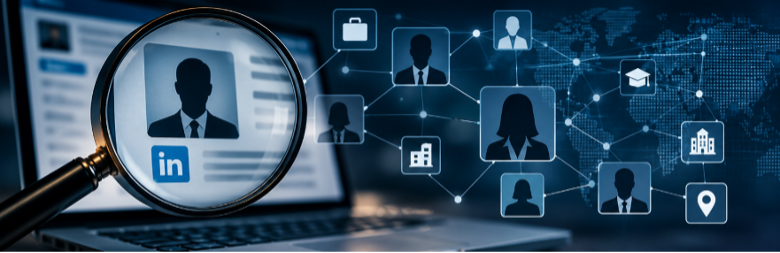
Relationships are an important part of digital investigations. LinkedIn may help identify coworkers, supervisors, employees, business partners, clients, professional associates, and other individuals connected to the subject. These connections can become valuable investigative leads.
An associate may publicly discuss a project involving the subject.
A coworker may post photographs from a company event.
A business partner may announce a new venture.
An employer may publicly congratulate the subject on a promotion.
Sometimes another person’s online activity provides information that the subject never disclosed on their own profile.
This is why investigators should look beyond the subject and consider the digital environment surrounding them.
LinkedIn Activity Can Tell a Different Story
A LinkedIn profile is only one part of the platform.
Posts, comments, reactions, photographs, announcements, and other activity may provide additional context about what a subject is currently doing.
Depending on the scope of an investigation, activity may reveal information related to:
• Employment changes
• Business ventures
• Professional events
• Conferences
• Travel
• Geographic locations
• Projects
• Professional relationships
• Industry involvement
• Awards and accomplishments
• Recent professional activity
A subject does not necessarily need to create their own post to leave a digital trail.
Comments and interactions can be equally important.
Even a short comment on another person’s post may help establish a relationship, confirm professional involvement, or provide another avenue for research.
Business Interests May Be Hiding in Plain Sight
LinkedIn can also help investigators identify business interests that may not immediately appear through a standard social media search.
A subject might identify themselves as an owner, founder, consultant, contractor, advisor, partner, freelancer, or investor.
That information can open an entirely new area of research.
Once a business is identified, investigators may be able to examine publicly available company websites, business records, professional profiles, social media accounts, reviews, advertisements, and other online sources.
This is especially important because people sometimes maintain a stronger online presence for their businesses than they do for themselves.
A relatively private individual may operate a very public company.
Don’t Forget the People Around a Business
When investigating a company, the company’s official LinkedIn page is only one potential source.
Employees and leadership may reveal additional information through their personal profiles.
For example, employees may discuss new projects, office openings, hiring, partnerships, conferences, company events, leadership changes, or expansion.
This information may provide context that does not appear on the company’s official website or social media accounts.
In some investigations, understanding the individuals connected to a business can be just as important as researching the business itself.
Education Can Strengthen Subject Identification
Education, certifications, licenses, training, and professional organizations can provide additional identifiers. This becomes particularly valuable when investigating someone with a common name. Consider two individuals with the same name. If one individual attended the same university as the subject, works in the correct industry, lives in the expected geographic area, and is connected to a known associate, those combined details provide significantly more context than a name match alone. This is where analysis becomes critical. Investigators should evaluate multiple identifiers rather than relying on a single matching piece of information.
Attribution Matters
Finding a profile and proving that it belongs to the subject are two different things. This distinction is extremely important in professional OSINT investigations. A matching name alone may not provide enough information to confidently attribute an account. Investigators should consider the totality of available identifiers, which may include:
• Name
• Location
• Employment
• Education
• Known associates
• Usernames
• Profile photographs
• Email addresses
• Phone numbers
• Historical information
The strength of those identifiers should determine the level of confidence associated with the profile. This is especially important when investigative findings may be used in litigation, insurance matters, corporate investigations, background investigations, or other professional settings.
One Finding Should Lead to Another
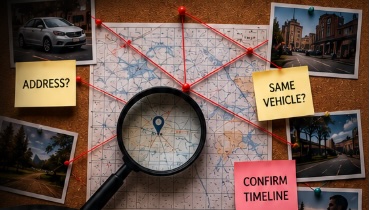
One of the most important skills in OSINT is knowing how to pivot. Imagine an investigator identifies a previously unknown employer through LinkedIn. That employer can now be researched independently. The company’s website identifies the subject as part of its leadership team. A business record connects the subject to another company. That company has an Instagram account. The Instagram account contains photographs from an event. Those photographs identify another associate. That associate leads to another piece of relevant information.
The investigation started with LinkedIn, but the most valuable finding may ultimately come from somewhere completely different. This is why comprehensive online investigations require more than searching a list of social media platforms. Each finding should be evaluated for where it can lead next. Images Can Provide Additional Investigative Leads. Profile photographs and background images may also contain useful information. A background image could reveal a company, organization, event, location, vehicle, or other visual detail. Profile photographs may provide opportunities for additional image research.
When appropriate and legally utilized, reverse image searches and facial recognition technologies can help investigators identify additional publicly available online content. However, image results should always be analyzed carefully. A potential image match is an investigative lead. It should not automatically be considered confirmation of identity. Other identifiers should be evaluated before making an attribution.
LinkedIn is Part of a Larger Digital Footprint
The greatest value of LinkedIn may be its ability to connect information. An employer can reveal a location. A location can reveal another profile. A profile can reveal an associate. An associate can reveal a business. A business can reveal additional online activity.
That activity can lead investigators to information they may never have discovered by simply searching the subject’s name. This is where professional OSINT analysis becomes especially valuable. Finding information is only the first step.
Why Work With E-Chatter
At e chatter, online investigations are what we do every day.
Our analysts understand that a strong digital investigation requires much more than entering a subject’s name into a search tool and collecting whatever appears.
We dig deeper.
Our team examines publicly available information across social media platforms, websites, professional networks, applications, records, and other online sources to help uncover a subject’s broader digital footprint.
More importantly, our analysts review and connect the information.
We look for relationships between accounts, usernames, locations, employment, businesses, associates, images, and online activity to help provide our clients with meaningful investigative intelligence rather than simply a collection of search results.
Whether you are a private investigator, attorney, insurance professional, or other investigative professional, e chatter can help expand your investigative capabilities without requiring your team to spend hours searching across the internet.
From focused social media research to comprehensive digital footprint investigations, our goal is simple:
Help you see more of the digital story.
Want to see what E- Chatter can do for your next investigation?
Visit our E-Chatter Client Portal to explore our available services, view current pricing, create an account, and submit your next search:
You handle the investigation. We help uncover the digital footprint.