Drugs & the Dark Web: Update

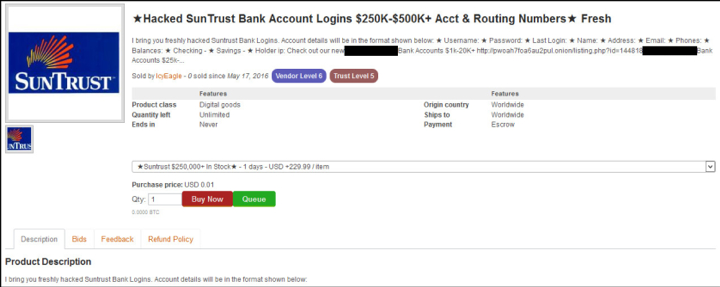
Dark web markets are viewed as one of the crucial sources of fentanyl, synthetic opioids, and other illegal drugs. Often produced in China, these drugs are sent to users found on the dark net. The packages flowing from China are blamed for compounding the opioid crisis in the United States. Empire, one of the largest markets still online, features more than 26,000 drug and chemical listings, including over 2,000 opioids, shipped right to a customer’s mailbox.


And although many of the major sites have been shut down, the online trafficking of illegal drugs has not stopped. The fight against online drug sales is a constant cycle: There are raids, sites are taken down, and a few people are arrested. And after a while the trade and markets pop up somewhere else. “The instability has become sort of baked into the dark-web market experience,” said Emily Wilson, an expert on the dark web at the security firm Terbium Labs. “People don’t get quite as scared by it as they did the first few times.”


Silk Road, the original dark net market that came online in 2011, was shut down in 2013. When its creator, Ross Ulbricht, was put in jail, there was a widespread assumption that his failure and punishment would deter imitators. But that was not the case. In 2014, a massive crackdown called Operation Onymous helped arrest 17 people by exploiting a vulnerability in the anonymity software Tor, which serves as the dark web’s fundamental cloaking tool. Yet by 2017, another site, AlphaBay, rose up to become bigger than Silk Road had ever been. The FBI took down Alphabay in July of that year while Dutch police hijacked the second-largest dark-web market, Hansa. The double takedown, called Operation Bayonet, was intended not only to ensnare dark-web buyers and sellers but to scare them, too.
Just recently, global law enforcement announced the takedowns of two of the world’s largest dark-web drug sites, Wall Street Market and Valhalla. And this past week, the FBI and Europol announced their latest win: The takedown of dark-web news and information site DeepDotWeb, which had quietly made millions of dollars from offering promotional links to black market sites in an underground affiliate marketing scheme. “We think it’s going to have a huge impact,” FBI special agent Maggie Blanton, who leads the bureau’s Hi-Tech Organized Crime Unit, told WIRED. “We viewed DeepDotWeb as a gateway to the dark web.”


But despite those wins, new sites keep popping up due to an economy where the demand—drug-addicted users—remains constant or growing. “History has taught us that this ecosystem is very, very resilient,” says Carnegie Mellon computer scientist Nicolas Christin, a longtime dark web researcher. “It’s part of a cycle, and we’re in the chaotic part of the cycle. We’ll have to see how it recovers. But if I were a betting person I would put more money on it recovering than on it dramatically changing.”


Governments have dedicated increasingly substantial resources to fighting dark net markets, especially as their role in the rise of synthetic opioids has become clearer. In early 2018, the F.B.I. created the Joint Criminal Opioid Darknet Enforcement team, or J-Code, with more than a dozen special agents and staff. Europol has its own dedicated dark web team. During the first few months of 2019, American officials conducted an operation called SaboTor, which focused on the vendors selling drugs on the dark net. There were 61 arrests in just a few weeks. One ring, in the Los Angeles area, was said to be responsible for shipping 1,500 packages of crack, heroin and methamphetamine each month. Richard Downing, who oversees the computer crime section of the Justice Department, said he and his colleagues have focused on techniques that create distrust on the sites by encouraging users to believe that sellers and site administrators have already been compromised and are feeding information to law enforcement.


But despite the numerous shut downs and arrests, data from Chainalysis suggests that before the latest crackdown, transactions on the dark net had recovered to nearly 70% of the previous peak, right before AlphaBay went down, and were growing each month. “After some years now of this cycle, it would be hard to say that it’s likely we’re going to stamp this out completely,” Mr. Downing said. “I am hopeful that our efforts to spread deterrence and mistrust are having an impact on how quickly they come back and how strongly they come back.”


The surviving markets, and new ones that have already popped up, have adopted measures to make them more difficult targets for the authorities. Using alternative cryptocurrencies, like Monero, make transactions harder to track. And DeepDotWeb already has a formidable successor in the social network and news site Dread, which is available only on the dark net. One of the new markets that have emerged recently, Cryptonia, has promised that it has figured out many of the flaws that made previous sites vulnerable to the police. “As geeks, we believe that with the right technology most of these problems can be solved,” the Cryptonia Team Manifesto says. “That’s why we have set out to build the perfect dark net trading platform.”
Most users of the dark web see the attacks as a waste of time. “The war on drugs is a complete failure, a bottomless money pit,” writes one user. But both the FBI and Europol officials see their fights as necessary—even if only to limit the dark web markets’ growth and make it even incrementally harder to buy dangerous drugs like fentanyl online. “Any small win is a victory,” the FBI’s Blanton says. “We care about stopping even one more person from overdosing.”


“Some people you’re not going to deter from going to these markets. But there are a large number of people who would never considering buying drugs on a street corner or from a shady dealer but who will use the perceived anonymity of the internet to do this,” Europol’s Steven Wilson says. “If we can dissuade those people, how many lives to do we end up saving?”

About Us:
We have been mining social media since 2007 for our clients. By utilizing best in class software programs, we offer a service called eChatter.
eChatter works with you to obtain your objectives in a fast, accurate and reliable facet. By keeping our strengthened principals, yet evolving with this industry, we lead in social media monitoring. Since 2007, we have been dedicated to providing our customers with the most authentic data.

www.e-chatter.net
(866) 703-8238

How Online Data & AI Help Fight Human Trafficking

Human trafficking is rampant in our country, but not often mentioned. It happens in the shadows, on the dark web, is hard to track, and tough to talk about.

The crime of human trafficking—defined by the U.S. Department of Homeland Security as modern-day slavery that “involves the use of force, fraud, or coercion to obtain some type of labor or commercial sex act—is notoriously difficult to prosecute. Victims, who are mostly women and children, often lack legal documentation and many fear reprisals if they go to authorities. Therefore perpetrators go to great lengths to conceal their behavior by laundering money and keeping their operations quiet. 

Recently, law enforcement agencies and organizations that help victims of human trafficking have begun using artificial intelligence tools to overcome this lack of visibility. By sorting through data and recognizing patterns faster than any human could, AI tools are helping activists and investigators crack down on buyers of sex, identify trafficking victims and follow illicit money trails. 


“Imagine the techniques that Google and Facebook are using to make a profit—understanding people, the way they connect, what their interests are, what they might buy or the activities they engage in,” says Dan Lopresti, professor and chair of the department of science and engineering at Lehigh University’s P.C. Rossin College of Engineering and Applied Science. “We can apply those same techniques—data mining, text mining, what’s called graph mining—AI that’s being used for legitimate and really profitable purposes, to track these illicit behaviors.”

Lopresti is involved with the Regional Intelligence and Investigation Center (RIIC) in Allentown, PA. Launched in 2013, the RIIC has “revolutionized” the way area police departments “analyze and share collected data to solve crimes,” according to the office of Lehigh County District Attorney James Martin.

Lopresti, who is an expert in document analysis and pattern recognition, is working with RIIC Director Julia Kocis, prosecutors, law enforcement officials and other Rossin College computer science and engineering faculty members to help overcome the challenges of turning vast amounts of data, primarily from police incident reports, into something useable, despite limited resources.

“If an expert sits down and reads enough of these, he or she will find a common thread—this person is related to this place, which is related to this activity, which is related to this other person,” he says. “The trouble is, they’ve got millions of these reports and just don’t have enough time to read through them. We’re developing natural language techniques, text mining and data mining techniques that are oriented to processing lots of data to identify patterns of behavior that would reflect illegal activities related to human trafficking.”

Because human trafficking is a $150 billion-per-year criminal industry, many companies are joining the fight and helping out. IBM worked with the STOP THE TRAFFIK (STT) coalition to develop a new cloud-hosted data hub that allows financial institutions to run AI and machine learning tools against their data sets to detect “specific human trafficking terms and incidents.” AI also allows the data hub to take in open-source data — including thousands of news feeds each day — to help analysts more easily identify the characteristics of human trafficking incidents. 

Josh McAfee

Entrepreneur Josh McAfee, a former law enforcement officer and loss-prevention executive, is the founder and CEO of McAfee Institute, a Peoria, Illinois-based business that trains corporations and law enforcement agencies to battle cybercrime and fraud. But what brings him the most satisfaction is locating victims of human trafficking.

Since 2011, his company has helped bring back about 1,900 human-trafficking victims, 1,000 of them children.

He now teaches a course on human trafficking to an average of 150 to 200 people a month. “We’re developing leaders in the classroom, so they can go out and utilize our techniques within their organizations. It multiplies our success and enables us to make a huge impact,” says McAfee. “Growing up, I always had a passion for law enforcement. I wanted to get out there and fight crime, get the bad guys–you know, help people. That’s why I became a law enforcement officer right out of college. To be able to do this kind of work in my business is everything to me. It’s what I was born to do.”

How to Manually Get to Deep Web Content

In a recent article , the deep web was clarified – what it is, what it’s not, and why it can be useful. The question that always comes up is, “How can we access it?”

In part, you are accessing it each time you do a Google search – you’re just not going back far enough through the search results. Outside of spending hours weeding through page 25 of a search result, how can deep web searches be more efficient?

1. Google may be a household name, but it’s not the only game in town. Most people rely on Google to be their online search companion. Of course Google is the major player – after all, it’s become more than a search engine – it’s a verb. Don’t forget about the other search engines, namely Bing and Yahoo. While they may be considered the red-headed stepchildren, they can still be helpful. Like software platforms, each of the major search engines has its own algorigthm, which in turn may produce different results. What Google things is unimportant may be significant to Yahoo or Bing, or vice versa. Search using a variety of major search engines to find the most content available.

2. YouTube isn’t just for music anymore. From music to how to videos to families sharing cute kid videos, YouTube has become almost as popular of a search engine as Google. Don’t forget to run searches in YouTube as well.

3. Don’t start at the beginning. When running a general search using Google, Bing, or Yahoo, start at page 3, maybe 4. Don’t start with the first page. Those are the surface web results that you can easily look at later. To get to the deeper content, you’ll need to start on a later page. You will start to find more irrelevant results on these later pages too – don’t let that deter you; within those false positives can be some great information to help in your research efforts.

4. Use more than a name. Don’t just search a person’s name or their name with a city and/or state – search using known user names the person created for social accounts, nicknames, phone numbers, addresses, the person’s name and a family member’s name, you get the idea. Set up searches that use more specific information and you may find more information this way.

5. Learn how to search using Boolean. While you’ve likely heard the term and you’re only knowledge of Boolean search is what most of us think of – using AND, OR, or quotes in your search – there is so much more to it. Setting up specific searches in a certain way can bring those deep web results to the surface. We recommend taking a look at the sites below as a guide to learning how to use Boolean searching to your benefit.

https://ahrefs.com/blog/google-advanced-search-operators/

https://www.talkwalker.com/blog/how-boolean-search-operators-make-searching-a-piece-of-cake

Knowing how to search efficiently can help you dive into the deep web and find what you might be looking for. It’s not a scary place, like the dark web, and shouldn’t be confused with that. It’s just a matter of having patience and knowing how to search to access this type of information.

How Law Enforcement Uses The Dark Web

Have you ever had your identity stolen? If you haven’t, consider yourself lucky. On a daily basis we hear reports of someone stealing a credit card, hijacking bank accounts, or creating false online profiles. One thing is clear: Cyber criminals are constantly trying to steal our personal information…and this information often ends up on a place called the Dark Web.

So what exactly is the Dark Web?

The dark web is a portion of the internet that can only be accessed by using certain browsers and software.

NBC10 Boston Investigators sat down with Andrei Barysevich, the director of advanced collection for Recorded Future, a Somerville-based cyber intelligence company. “You can pretty much find anything,” Barysevich said. “Stolen identities, credit card numbers, compromised data or weapons and drugs.”

In the past two years, Barysevich has gone from a team of one to a team of several dozen cyber intelligence analysts, combing through more than 2 million Dark Web sources per week. His employees, typically fluent in several foreign languages, act like “flies on the wall” in Dark Web online forums, Barysevich said, attempting to gather information about what’s being bought and sold.

On one disturbing site, Barysevich showed NBC10 Boston Investigator Ryan Kath how easy it is to buy the Social Security number of almost anyone in the United States. Using one of Recorded Future’s accounts to pay the $3 charge, Kath plugged in his name. After a search that only took a few seconds, Kath’s personal information appeared on the screen. Barysevich said everyone should assume their information was at one point stolen and is available on the Dark Web.

Christopher Ahlberg, CEO of Recorded Future said, “Cyber security has grown incredibly in the past few years. It’s the idea of being able to catch cyber threats before they hit you. To do that, you need to infiltrate the places that bad guys hang out.” When valuable information is uncovered, Recorded Future shares the details with the pertinent parties, whether it’s a government agency, financial institution or law enforcement. One notable example was when the company spotted a hacker selling sensitive documents about military drones.

Mark Turnage is another investigator who is familiar with the dark web. Turnage’s company, DarkOwl, helps law enforcement and cyber security firms monitor the criminals who lurk in the dark web. “The dark net is appealing to criminals because it completely anonymizes their presence,” Turnage explained. There are no IP addresses. There is no way to trace the person on a keyboard to a physical location. All law enforcement can do is wait for criminals to slip up.

Luckily, that happened in the case against Danny McLaughlin. The Colorado man is accused of attempting to hold a 13-year-old girl captive for sex and trying to hire a hitman to kill his wife. The criminal complaint filed against McLaughlin says his crimes started on the dark web on a site for people who enjoy torture and killing.

McLaughlin was only identified and caught when investigators say he agreed to meet at a Centennial hotel with the person who had agreed to murder his wife. That person was really an undercover detective.

“Thank goodness he made that mistake and was arrested. Had he not gone to that hotel room, it would have been near impossible for them to figure out who this person was,” said Turnage.

Recently, International police group Interpol arrested nine people in Thailand, Australia, and the U.S. and 50 children had been rescued after investigators took down an online pedophilia ring. Police in nearly 60 countries combined efforts in this Interpol operation launched two years ago into a hidden “dark web” site with 63,000 users worldwide. Fifty children were rescued following the arrests.

Interpol said its Operation Blackwrist began after it found material that was traced back to a subscription-based site on the dark web, where people can use encrypted software to hide behind layers of secrecy. Interpol enlisted help from national agencies worldwide, with the US Homeland Security Investigations (HSI) department eventually tracking the site’s IP address, where new photos and videos were posted weekly.

The first arrests came in early 2018, when the site’s main administrator, Montri Salangam, was detained in Thailand, and another administrator, Ruecha Tokputza, was captured in Australia. Salangam, whose victims included one of his nephews, was sentenced in June last year to 146 years in prison by Thai courts. Interpol said children were lured to Salangam’s home with the promise of food, internet access and soccer games.  

One of his associates, a pre-school teacher, got 36 years. Tokputza was handed a 40-year prison term at his trial in Australia last Friday, the longest ever for child sex offences in the country. The Australian Associated Press reported that Tokputza, 31, pleaded guilty to 50 counts of abuse of 11 babies and children — one just 15 months old — between 2011 and 2018. The HSI’s regional attache in Bangkok, Eric McLoughlin, said in the statement that “numerous arrests” had been made in the US. Some held “positions of public trust,” he said, and one individual was abusing his two-year-old stepbrother.

“Operation Blackwrist sends a clear message to those abusing children, producing child sexual exploitation material and sharing the images online: We see you, and you will be brought to justice,” Interpol’s Secretary General Juergen Stock said.

What Can You Do to Avoid the Dark Web?

To reduce your risk of being hacked or having information stolen, Barysevich offers these tips:

• Freeze your credit report, something that can be done for free

• Activate text and email alerts for activity on your bank accounts

• Question why you need to provide a Social Security number or copy of your driver’s license when you visit the doctor, dentist, or other professional office

• Don’t use the same password for multiple online accounts

While some consumers might want to throw up their hands in frustration, Ahlberg — the Recorded Future CEO — said not to give up the fight. The goal is to decrease the odds that you’ll be cyber thieves’ next target.

But That’s Not Our Guy – Why Social Media & Online Research Can Be Frustrating

DIY platforms and other data gathering programs are great, but before you consider them to be inaccurate or not helpful, keep in mind that they are only as good as the person using them for research.

For many professions, including private investigators, law firms, and insurance companies, social media and online research on individuals has opened a new venue for assisting with investigations into court cases, insurance fraud, and other situations.

While it can be done, it can also be time consuming and frustrating. The more common the name, and the less information that is being used to search for a person’s online activity, the longer it can take. One roadblock is information that does not actually belong to the person you’re looking at – their information is getting mixed up with someone else with the same name.

In talking with folks in the industry, this is a pain point that not only makes it more difficult to search for people online, but it also gives the impression that the quality of such searches is not great. This can make investigators leery and question the benefit of conducting such research.

It’s important to remember a few key points when considering options for conducting social and online research:

1. Software is good, but will never be perfect. Whether it’s a DIY online search platform or TLO/Tracers/IDI report, there is a chance that information will be provided that does not in fact belong to the individual you’re interested in, whether it’s a phone number, email address, or social site. The opportunity for false positives is there no matter what platform is being used.

It’s important to utilize multiple software platforms – what one will pick up, another will miss, and what one provides as a “false positive” another will not pick up at all. Each platform works off its own algorithm, or process for producing search results based on what information is provided about an individual.

If an investigator is using such programs to conduct a search, they can be very valuable. However, it is important to keep in mind that not all information provided will be accurate; these are meant to be used as a starting point in an online investigation – manual research & identification will be needed to confirm whether a piece of information really belongs to the person you’re looking at. Typically, if it’s not readily clear from the initial search, a good rule of thumb is to find three pieces of confirmation to ensure it’s the person’s social account or site.

Here’s an example: if you find a Facebook page that you think belongs to the individual, but perhaps it’s not really clear just from looking at the user name or “About” section, take a look at their friends list, places they’ve checked in, “About section” to see if birthdays or employers are listed, etc. If you can identify the location of the individual whose Facebook page you’re looking at, or maybe confirm that some of their Facebook friends are relatives that correspond with findings from a TLO report, then you can be more certain that it’s the right account.

2. What may seem to be inaccurate information can actually be a key to what you’re looking for. Sometimes people will see social reports and say something like, “That phone number for Joe is so old and hasn’t been used in years. This report isn’t accurate at all. I want his current phone number.” Valid point, but here’s something to keep in mind: Joe may have accounts, comments, or forum membership tied to these old numbers. While he’s not currently using the phone number, the accounts still live online and are easier to tie to Joe. Sometimes these old accounts are long forgotten, which means they’re not being scrubbed if they are involved in a situation where a lawyer tells them to “clean up their online presence.” This means that there could be valuable information to find based on what seems to be inaccurate information.

3. DIY programs are great, but they are called DIY for a reason. There are many companies who will allow you to purchase a subscription to an online search product to find content posted by or about an individual. As this type of research has evolved, the services have greatly improved. There is definitely a place for do it yourself search programs – but you have to do it yourself. No matter what the company claims, it will not be as simple as entering some information about an individual and being presented with all of the person’s online activity without any false positives or inaccurate information. It’s going to take you (the “yourself” part in DIY) to validate, investigate, and determine the validity of the results. Before deeming a DIY program as not useful, remember its actual purpose and that it is not meant as a be all end all service. And, if the company is promising that it is, you may want to reconsider using it.

4. There is no magic bullet – online research takes a lot of time. There’s no way around it. While we all wish a software platform would be created to give us instant and completely accurate results, this will likely never happen. Why? Things are changing all the time, whether it’s social media privacy laws, Google algorithm updates, or any number of things that can change in an instant. This is where online and social media research gets tricky and frustrating, leaving people to give up easily. Software can not be relied on as a standalone product – manual research is needed to confirm the validity of the information provided, and then take that information as a starting point and fleshing out what can be found through manual searching. When multiple platforms and other similar products are used simultaneously, the time spent can be greatly reduced. This is why it can be useful to turn to a full-service social media and online research service – they often have efficiencies in place to search quicker and provide more accurate results, which saves a lot of time for those needing to conduct investigations.

DIY platforms and other data gathering programs are great, but before you consider them to be inaccurate or not helpful, keep in mind that they are only as good as the person using them for research. Take them for what they are and realize that they will not be the magic bullet to quickly investigate an individual’s online activity.