In a recent article , the deep web was clarified – what it is, what it’s not, and why it can be useful. The question that always comes up is, “How can we access it?”
In part, you are accessing it each time you do a Google
search – you’re just not going back far enough through the search results.
Outside of spending hours weeding through page 25 of a search result, how can
deep web searches be more efficient?
1. Google may be a
household name, but it’s not the only game in town. Most people rely on
Google to be their online search companion. Of course Google is the major
player – after all, it’s become more than a search engine – it’s a verb. Don’t
forget about the other search engines, namely Bing and Yahoo. While they may be
considered the red-headed stepchildren, they can still be helpful. Like
software platforms, each of the major search engines has its own algorigthm,
which in turn may produce different results. What Google things is unimportant
may be significant to Yahoo or Bing, or vice versa. Search using a variety of
major search engines to find the most content available.
2. YouTube isn’t just
for music anymore. From music to how to videos to families sharing cute kid
videos, YouTube has become almost as popular of a search engine as Google.
Don’t forget to run searches in YouTube as well.
3. Don’t start at the
beginning. When running a general search using Google, Bing, or Yahoo,
start at page 3, maybe 4. Don’t start with the first page. Those are the
surface web results that you can easily look at later. To get to the deeper
content, you’ll need to start on a later page. You will start to find more
irrelevant results on these later pages too – don’t let that deter you; within those
false positives can be some great information to help in your research efforts.
4. Use more than a
name. Don’t just search a person’s name or their name with a city and/or
state – search using known user names the person created for social accounts,
nicknames, phone numbers, addresses, the person’s name and a family member’s
name, you get the idea. Set up searches that use more specific information and
you may find more information this way.
5. Learn how to search using Boolean. While you’ve likely heard the term and you’re only knowledge of Boolean search is what most of us think of – using AND, OR, or quotes in your search – there is so much more to it. Setting up specific searches in a certain way can bring those deep web results to the surface. We recommend taking a look at the sites below as a guide to learning how to use Boolean searching to your benefit.
Knowing how to search efficiently can help you dive into the deep web and find what you might be looking for. It’s not a scary place, like the dark web, and shouldn’t be confused with that. It’s just a matter of having patience and knowing how to search to access this type of information.
Have you ever had
your identity stolen? If you haven’t, consider yourself lucky. On a daily basis
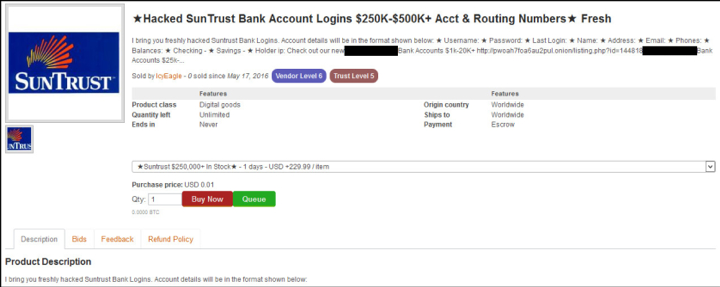
we hear reports of someone stealing a credit card, hijacking bank accounts, or
creating false online profiles. One thing is clear: Cyber criminals are
constantly trying to steal our personal information…and this information often
ends up on a place called the Dark Web.
So what exactly is the Dark Web?
The
dark web is a portion of the internet that can only be accessed by using
certain browsers and software.
NBC10 Boston
Investigators sat down with Andrei Barysevich, the director of advanced
collection for Recorded Future, a Somerville-based cyber intelligence
company. “You can pretty much find anything,” Barysevich said.
“Stolen identities, credit card numbers, compromised data or weapons and
drugs.”
In the past two
years, Barysevich has gone from a team of one to a team of several dozen cyber
intelligence analysts, combing through more than 2 million Dark Web sources per
week. His employees, typically fluent in several foreign languages, act like
“flies on the wall” in Dark Web online forums, Barysevich said,
attempting to gather information about what’s being bought and sold.
On one disturbing
site, Barysevich showed NBC10 Boston Investigator Ryan Kath how easy it is to
buy the Social Security number of almost anyone in the United States. Using one
of Recorded Future’s accounts to pay the $3 charge, Kath plugged in his name.
After a search that only took a few seconds, Kath’s personal information
appeared on the screen. Barysevich said everyone should assume their
information was at one point stolen and is available on the Dark Web.
Christopher Ahlberg,
CEO of Recorded Future said, “Cyber security has grown incredibly in the
past few years. It’s the idea of being able to catch cyber threats before they
hit you. To do that, you need to infiltrate the places that bad guys hang
out.” When valuable information is uncovered, Recorded Future shares the
details with the pertinent parties, whether it’s a government agency, financial
institution or law enforcement. One notable example was when the company
spotted a hacker selling sensitive documents about military drones.
Mark
Turnage is another investigator who is familiar with the dark web. Turnage’s
company, DarkOwl, helps law
enforcement and cyber security firms monitor the criminals who lurk in the dark
web. “The dark net is appealing to criminals because it completely
anonymizes their presence,” Turnage explained. There are no IP addresses.
There is no way to trace the person on a keyboard to a physical location. All
law enforcement can do is wait for criminals to slip up.
Luckily,
that happened in the case against
Danny McLaughlin. The Colorado man is accused of attempting to hold a
13-year-old girl captive for sex and trying to hire a hitman to kill his wife. The
criminal complaint filed against McLaughlin says his crimes started on the dark
web on a site for people who enjoy torture and killing.
McLaughlin
was only identified and caught when investigators say he agreed to meet at a
Centennial hotel with the person who had agreed to murder his wife. That person
was really an undercover detective.
“Thank
goodness he made that mistake and was arrested. Had he not gone to that hotel
room, it would have been near impossible for them to figure out who this person
was,” said Turnage.
Recently,
International police group Interpol arrested nine people in Thailand, Australia,
and the U.S. and 50 children had been rescued after investigators took down an
online pedophilia ring. Police in nearly 60 countries combined efforts in this
Interpol operation launched two years ago into a hidden “dark web”
site with 63,000 users worldwide. Fifty children were rescued following the
arrests.
Interpol
said its Operation Blackwrist began after it found material that was traced
back to a subscription-based site on the dark web, where people can use
encrypted software to hide behind layers of secrecy. Interpol enlisted help
from national agencies worldwide, with the US Homeland Security Investigations
(HSI) department eventually tracking the site’s IP address, where new photos
and videos were posted weekly.
The
first arrests came in early 2018, when the site’s main administrator, Montri
Salangam, was detained in Thailand, and another administrator, Ruecha Tokputza,
was captured in Australia. Salangam, whose victims included one of his nephews,
was sentenced in June last year to 146 years in prison by Thai courts. Interpol
said children were lured to Salangam’s home with the promise of food, internet
access and soccer games.
One
of his associates, a pre-school teacher, got 36 years. Tokputza was handed a
40-year prison term at his trial in Australia last Friday, the longest ever for
child sex offences in the country. The Australian Associated Press reported
that Tokputza, 31, pleaded guilty to 50 counts of abuse of 11 babies and
children — one just 15 months old — between 2011 and 2018. The HSI’s regional
attache in Bangkok, Eric McLoughlin, said in the statement that “numerous
arrests” had been made in the US. Some held “positions of public
trust,” he said, and one individual was abusing his two-year-old
stepbrother.
“Operation
Blackwrist sends a clear message to those abusing children, producing child
sexual exploitation material and sharing the images online: We see you, and you
will be brought to justice,” Interpol’s Secretary General Juergen Stock
said.
What Can You Do to Avoid the Dark
Web?
To reduce your risk
of being hacked or having information stolen, Barysevich offers these tips:
• Freeze your credit
report, something that can be done for free
• Activate text and
email alerts for activity on your bank accounts
• Question why you
need to provide a Social Security number or copy of your driver’s license when
you visit the doctor, dentist, or other professional office
• Don’t use the same
password for multiple online accounts
While some consumers
might want to throw up their hands in frustration, Ahlberg — the Recorded
Future CEO — said not to give up the fight. The goal is to decrease the odds
that you’ll be cyber thieves’ next target.
Not too long ago the highlight of our
day was hearing “You’ve got mail!”
Those were simpler times when we didn’t
have to worry so much about offending people with what we posted or someone
sharing our status. But now, social media allows anyone, including students, to
make any part of life much more public. Whether you like it or not.
Politicians, professional athletes, and
celebrities are the most common groups to have their posts shared, retweeted,
and broadcast across social media platforms for all to see. But lately,
students have been making waves. From social justice campaigns, to
controversial photos or videos, students’ social media posts can stir up some
strong reactions.
So what exactly is acceptable when
students decide to take their opinions online? Can students expect to have
their “free speech” protected?
The First Amendment and Online
Expression
In general, students have the right to freedom of
expression unless it infringes on the rights of others, school safety, or interferes with the ability of a school to
deliver its educational services and processes. Thus,
off-campus online expression would be protected in the same way as traditional
speech.
We must protect First Amendment rights of students
while also recognizing that schools do have some ability, under very limited
circumstances, to discipline students for off-campus speech.
But when “free speech” becomes threatening, that’s
when educators need to speak up. Some instances of student social media use,
including that which is off-campus, amount to misconduct that can be
disciplined according to school policy.
Let an administrator know about student
social media use that:
Breaches school policy.
Leads to or creates substantial
disruption to the educational process.
Results in bullying toward students or
staff.
Threatens school violence.
Here are some questions that may help
students decipher what they should and should not do when using social media in
regards to school policy.
Do I have the right to access social media while I’m at school?
Yes
and No. It is up to the school to determine when it is appropriate to
use devices that allow social media access. Some schools prohibit personal cell
phones on campus and others may block certain sites on their computers and
networks. Check your school’s policy to learn the rules.
Are my rights different if I use a school computer or device
instead of my own?
Yes. Most
schools have rules for their own computers and devices that you have to follow.
There may be software installed that monitors your activity, including browsing
history, so be cautious of the actions you take while on a shared device. And
always log out of your accounts!
Can my school search for my social media activity without telling
me?
Yes
and No. If your school starts a social media monitoring program, they
must let you and your parents know, allow you to see the information they have collected
about your social media activity, and delete it when you leave the district or
turn 18.
If your school does not have a monitoring program, you do not
have the right to know what information teachers and officials find through
their own searching on social media. Remember, anything you post publicly can
be seen by anybody, including police officers, teachers, officials, and other
students.
Can I be disciplined for simply expressing my opinion on social
media?
Sometimes.
You have the right to speak your mind on social media. Your
school cannot punish you just because it doesn’t agree with your opinion.
However, you can be disciplined if you say something on social media during
school hours or at a school function or event that officials believe could lead
to a “substantial disruption,” your school can discipline you.
You
can also get in trouble for “cyberbullying” outside of school. This includes
creating false profiles, impersonating other students, or creating fake pages
in order to bully someone.
What is a “substantial disruption”?
Your speech is a substantial disruption when it encourages
violations of school rules, illegal activities, or it risks causing a big
interference with the education of other students. For example, threats to
other students or your teachers using social media will likely be considered a
substantial disruption.
What can I do to prevent school officials from looking at what I
post on social media?
Make sure your passwords are secret so that others can’t sign in
to your accounts and post as you. Manage your privacy settings to make sure
only your friends see your profile and posts. And remember that the people you
decide to share with may share your posts with others or in a public way.
Ultimately, with the great power of
social media comes great responsibility. Whether online or offline, on-site or
off-campus, student communication in the digital era is still plainly a First
Amendment issue. We must keep that in mind.
Social media has changed the way we communicate and live. We
feel the need to document our entire life, from our child’s first day of
school, to details of our family vacation, and even what we ate for dinner.
Most of us assume our posts are completely innocent, but nowadays social media has
become an extraordinary source of evidence. Our digital footprint grows daily
with every photo posted, status updated and video shared. These footprints are hard
to erase.
Yesterday’s
status update can easily become evidence in future litigation. This is
especially true in criminal, family, personal injury and employment law. The
practice of law and the ability to access information relevant to a case has
been noticeably impacted by the internet. Furthermore, the rise of social media
has given everyone with an internet connection the ability to receive, send,
and store information in numerous formats.
So how does
this storage and sharing of information on personal social media accounts can
play out in a legal case?
Private Posts Are Not Always Private
Social media users utilize their
privacy settings in different ways. Some people may have private Instagram and
Facebook accounts but a public Twitter account. Or they may have a private
Facebook account and public Instagram. Different platforms allow users to fine
tune exactly what they want other followers, users, or browsers to see.
But just how much privacy do you
actually have? Limiting a photograph you post to a specific audience is more
private than making it public. But do you really have an expectation of privacy
when you post to hundreds of “friends”, even with your privacy
settings activated?
Police in
Jacksonville, Florida, utilized social media in an investigation called Operation Rap Up.
Numerous alleged gang members were arrested for illegally possessing
weapons, which is prohibited for people with felony records in the state. The
sheriff told media that at least some of the evidence had come from YouTube
videos posted by the accused.
More and more,
police are increasingly turning to the internet to gather evidence about
suspects, and this material is being used in civil suits, ranging from divorces
to personal injury claims. If you file suit claiming that an injury sidelined
you from professionally playing basketball, yet later post pictures of yourself
shooting hoops, as the defense argued in a recent New York case, the court will
more than likely give the opposition access to your devices for more potential
evidence.
There are numerous methods of
capturing this evidence.
1) Print When police, lawyers, or investigators observe something on social
media in real time, they capture it immediately. There’s always a chance posts,
photos, and tweets will be deleted so grab them while you have the chance. By
printing the web page or social media post, you have a date and time stamp in
case the evidence is deleted.
2) Screenshot A better method of preserving social media evidence is to capture
a screenshot or screen picture. Essentially, you’re using
software to take a photo of what’s viewable on the display.
3) Software and tools built to preserve
While printing
or saving a screenshot preserves what you see, screenshots lack the
behind-the-scenes information (called metadata) that’s embedded into the
webpage or post. Police, investigators, and the like can now utilize software
built specifically for collecting and preserving online and social media
content. These tools log the accurate visual representation of the content as
well as all available metadata such as date, time, location, poster’s IP
address and browser used. All content can be digitally signed and time-stamped
in satisfaction of the legal requirements for submitting digital content as
evidence.
As people increasingly share their lives online, the incredible amount of
content will continue to grow and often be relevant to
litigation. And most courts are happy to allow this evidence. Judges have been generally
receptive to granting law enforcement warrants to obtain social media records
to use against them for an arrest or in an existing case against them. Facebook maintains a portal for law enforcement to
request evidence associated with an official investigation. Twitter has
codified a detailed set of guidelines for law enforcement requesting and obtaining
such evidence. YouTube, Google, and WhatsApp have done the same.
Teachers, just like students, have to be
careful about what they post on social media. With the prevalence of technology
everywhere you turn, an innocent status update or tweet can cause major damage
if interpreted the wrong way.
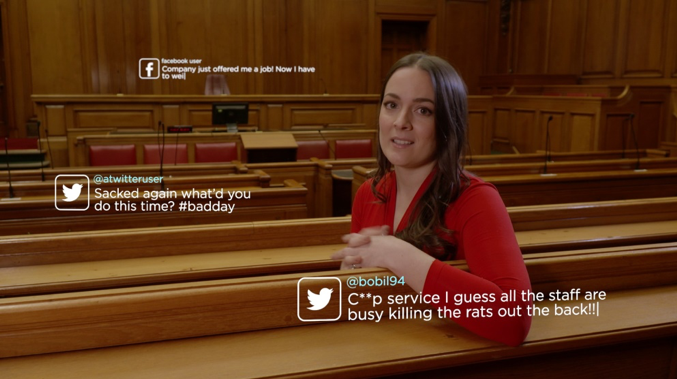
Many teachers have been fired for Facebook and
Instagram posts, tweets, and other social media posts. A teacher’s social media content can impact a
school’s reputation, and many cases exist of a teacher being fired for posting provocative content. Unless sharing an opinion on union activity or
working conditions, the First Amendment does not protect teachers. Protections exist within the classroom, but online platforms have proven vulnerable.
A suburban Chicago teacher is on leave due to a social
media post that used explicit language in reference to her fifth-grade
students. She complains about her fifth-grade class in a very vulgar way, which
many parents and students feel is inexcusable.
“It is so sad that we are trusting these
teachers with our kids, to get an education, thinking they are loving our kids
putting them on the right path,” Nikita Moss said.
According to East Aurora school district website,
the superintendent met with the employee upon learning of her post and placed
her on administrative leave until further notice. “Be assured that we take this
matter very seriously,” the district said in a statement. “We are
certain that the language used does not reflect the professionalism and
attitudes of District 131 teachers and staff, who care deeply for children and
work hard each day to build positive relationships with students.”
So
what should teachers do? What are the legal guidelines here?
First of all, check to see if your school district has a technology and social media policy. If so, read it and follow it to the letter. Gwyneth Jones, International Ed Tech keynote speaker, author of the award-winning Daring Librarian blog, and the teacher librarian at Murray Hill Middle School in Howard County, MD, says “I’m so proud that my district has had a “Responsible Use of Technology and Social Media Policy” since 2002 and has updated it every three years.” She shared the most important portion:
“Any postings by employees will not reference, link or contain:
Statements that could be viewed as malicious, obscene, threatening or
intimidating; that disparage students, employees, parents or community members;
or that could be viewed as harassment or bullying.”
According to Anthony Clark, a nine-year teaching veteran and
leader of the Suburban Unity Alliance in Chicago, teachers should always use
social media with the best interest of their students in mind. Because the
rules are often ambiguous and frequently broken, teachers must be prepared for
consequences when addressing issues related to their school. For teachers who
want to extend their lessons to social media, they very well might find a
unique platform for mentorship, but they also should be prepared to sacrifice
their jobs and reputation if a scandal breaks out.
Clark realizes that not every teacher will want to adopt his
mentorship approach, and he’s fine with that. But he does feel that every
teacher has the responsibility to at least be aware of and up to date on the
newest trends in social media. “Schools would benefit from allowing and
encouraging and providing some level of [social media] training for teachers
that find it valuable to build relationships,” Clark said. “We shouldn’t be
afraid of it because we can’t control it.”
Sure, teachers might sometimes overreach and place themselves in
controversies without knowing all the facts. But many times, teachers have a unique
understanding of the issues surrounding young people. They might have the
solution in their back pocket. The only way to contribute to the discussion in
many situations is social media. We should respect the voice of teachers and
allow them the freedom to speak on the issues that are central to future
generations.
What’s
the best advice for teachers?
If you must use social media, include
disclaimers that note that your speech is your personal opinion and not related
to your employment. Also, avoid speaking about work-related matters unless the
speech is protected as discussion related to working conditions and collective
bargaining.