Myspace Lost Tons of Music and Data

If you are above the age of 30, it is more than likely that you had a Myspace account. Myspace was “the place to be” before Facebook came along. The question is: Do you know what happened to your Myspace account? Did you abandon it when you converted to Facebook? Or is it still floating around out there in cyberspace?

Chances are you never planned to go back to Myspace, but if you did, your plans have been altered. That may not necessarily be a bad thing if you posted embarrassing pictures or posts that may not be regarded highly by your current employers. A quick scan of social-media chatter reveals plenty of people expressing relief that their Myspace histories had been deleted. Snapchat and Instagram Stories have become popular for a reason — they let users post without worrying about adding skeletons to their closets. In an age when old tweets constantly resurface out of context and you can be canceled at a moment’s notice for anything you might have done at any point in your posting history, the obliteration of one’s Myspace history may come as a relief.

Twitter Ads info and privacy

But for those who used Myspace as a career launch site – such as numerous musicians and artists – the latest announcement has been rather upsetting. Myspace just recently revealed it lost 12 years’ worth of music uploaded to its site, following a server migration error — a loss potentially amounting to 50 million songs. The Los Angeles-based company, which was once a leading music-sharing platform, announced that content uploaded to its site from its inception in 2003 up until 2015 may no longer be accessible.

“As a result of a server migration project, any photos, videos and audio files you uploaded more than three years ago may no longer be available on or from Myspace,” the company said in a statement on its website. “We apologize for the inconvenience.”

The site is credited with helping launch the careers of numerous international artists, including Kate Nash, Arctic Monkeys and Calvin Harris, who were discovered on the platform.

Steven Battelle, the former lead vocalist of British rock band LostAlone, expressed sadness at the data loss and said the platform played a pivotal role in the establishment of his group. “This makes me really sad, so much of the start of my band came from the exposure and community Mspace had,” he wrote on Twitter. “I still think it was the best platform for artists / bands. Just music and people who loved the music commenting on it.”

Generally speaking, big, mainstream data handlers like Myspace should be able to reliably store your data. They usually create backups and redundancies spread across multiple server farms. They should be able to revert after something like a failed server migration. If the website is going to make your data inaccessible by, say, ceasing operation, they should give you advance warning and the option to export your data. It should tell you proactively when there is a catastrophic screw-up. Myspace did none of these things, even though, even in its modern form, it almost certainly had the resources to do so.

Myspace has been in decline for years, unable to compete with other leading social media and music-sharing platforms including Facebook and YouTube, despite multiple redesigns of the site. In 2009, the platform employed approximately 1,600 people. It now has a staff of 150, according to the company website.


The Myspace debacle should be a lesson to younger people whose life revolves around social media: if it really truly matters, save it on a backup drive.

The Role of Social Media for the School Resource Officer

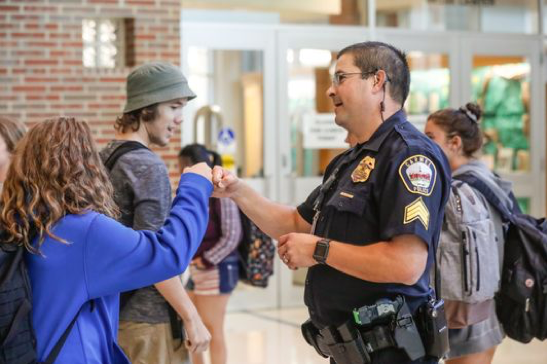
School resource officers (SROs) are now the gatekeepers to an untapped wealth of information. At their fingertips are computer databases containing well-networked contact information of every student who has attended the school, along with photographs and behavior reports. SROs can also utilize social networking web sites which offer staggering amounts of information. These resources allow SROs to identify frequently changing gang and drug trends as well as criminally active juveniles. 

Social Media and Intelligence


Because SROs are familiar with the culture of young people and know who to investigate online, they are at the forefront of social networking and information collection. The abundance of information presented on sites such as Facebook and Twitter can be a huge asset to law enforcement across the country. 

Facebook allows its users to post information and pictures on their personal “wall” covering any topic they wish to write about. Even more intriguing, users can carry on current, written conversations with friends on their wall for anyone to see. 

Twitter enables its users to send minute-by-minute messages or “Tweets” using several methods, including mobile texting, instant messaging and Web-based messaging, to whomever is an accepted “follower.” What makes Twitter unique is that the messages are sent in real time. Frequently, SROs may discover information about gang affiliation, narcotics dealings, underage drinking parties, terroristic threats or plans to disrupt the safety and security of a school.

Online investigations routinely lead to the discovery of photos that depict criminal activity. Brenda Miller, chief deputy attorney for Waseca County, Minn., specializes in juvenile prosecution. She explains, “Photographs can be used to establish probable cause and later be admitted as evidence.” According to Miller, “Photos are actually owned by the social networking web sites, and a person has no expectation of privacy in photographs owned by a third party unless they are trademarked.” 

Working with School Administrators


Successful information collection starts by building cooperative working relationships between SROs and school principals. David Dahl, principal of Armstrong High School in Plymouth, Minn., has devised such a program. Dahl recommends that SROs attend weekly meetings with school administrators. “These meetings are intended to transfer information between school administrators and SROs in an effort to prevent juvenile misconduct and provide needed intervention,” Dahl said. 

SROs also need to gain a better understanding of students’ rights in school, and bring information to school administrators about suspicious activity or suspected criminal misconduct. SROs also have an obligation to work with school district administrators and police supervisors who are interested in implementing communication systems or participating in information sharing programs. SROs must remain dedicated to building strong relationships with school administrators and investigating social media in an effort to collect and disseminate criminal intelligence.


Blake Prewitt, superintendent of Lakeview school district in Battle Creek, Michigan, typically wakes up each morning to twenty new emails from a social media monitoring system the district activated earlier this year. It uses keywords and machine learning algorithms to flag public posts on Twitter and other networks that contain language or images that may suggest conflict or violence, and tag or mention district schools or communities.

In recent months the alert emails have included an attempted abduction outside one school—Prewitt checked if the school’s security cameras could aid police—and a comment about dress code from a student’s relative—district staff contacted the family. Prewitt says the alerts help him keep his 4,000 students and 500 staff safe. “If someone posts something threatening to someone else, we can contact the families and work with the students before it gets to the point of a fight happening in school,” he says.

Lakeview’s service is provided by Firestorm, a Georgia company that also helps schools develop safety and crisis response policies. Hart Brown, Firestorm’s COO, told WIRED that earlier this year, the company’s system flagged a post by a student containing a photo of a backpack with a weapon inside. When the school’s principal approached the student on campus, they were carrying the weapon, Brown says.

Desmond Patton, a professor at Columbia, believes social media monitoring can work if managed correctly. “I think there’s an opportunity for schools to use this as a way to support people but I would do so with extreme caution,” says Patton. His lab has collaborated with social workers trying to reduce gang violence in Chicago to train machine learning software to find tweets expressing trauma and loss. The group has shown updates of those kinds often precede posts containing threats, and is hoping to test its algorithms as tool for community organizations in Chicago and New York City.

Scan public posts, targeting topics and locations not individuals, is a rock solid start to any successful school program. In Lakeview’s schools, students receive classes on social media. Those include guidance on privacy settings, but not discussion of the district’s use of Firestorm’s service. Both companies say they have designed their systems to work for different kinds of slang around the country, and frequently update their vocabularies with fresh data.

Executive Protection on Social Media

With the plethora of information shared on social media, the importance of security is on the rise. For individuals in powerful roles, executives (CEOs and COOs), and celebrities, most of this has to do with the security of personal data. Can hackers get into personal accounts? What will they do with the information they find?

Let’s dive deeper into executive protection (EP) in corporate and high net worth contexts. What can you do to protect your client’s reputation as well as their personal safety? Executive protection teams must be able to handle many different moving parts at once – reputation risk, physical security, and cybersecurity.

Of course, the easiest route is to just stay off social media. But that’s like telling a child not to lick the spoon when baking cake! EP pros need to know how to embrace social media, not reject it. Below are some strategies that can help best protect your clients. 

1) Social media is part of our world. Know how to navigate it.

According to recent research by the University of Massachusetts, Dartmouth, all but three Fortune 500 companies are active on social media with corporate accounts:

  • 98% use LinkedIn
  • 88% use Twitter
  • 85% use Facebook
  • 75% use YouTube
  • 53% use Instagram
  • 42% maintain blogs
  • 31% use Pinterest
  • 10% use Snapchat

Keeping track of what your principal is up to on social media helps EP pros in several ways. It helps you understand what’s going on in his or her life and what’s important to him or her. Being aware of contexts that are meaningful to your client is a good idea no matter what business you’re in – including the business of executive protection.

Also, observing what the principal is doing on social media – and what others are doing on social media regarding your principal – helps you improve your protective practices. You need to follow and understand what everyone else can follow and understand about the principal simply by taking a look at their smartphones. You need to monitor what others monitor. Then you can add your protective perspective so you’re looking for things that can impact the principal’s wellbeing, including time and place predictability.

2) Disable Geo-enabled Social Media Posts

Enabling the public to know your executive’s location opens up an entirely different world of risks, including oversharing information to those who don’t need it. Geo-enabled social media postings through location-based services (LBS) create physical risk, leaving the executive with little to no privacy.

The best way to combat this risk is to remove it completely – turn off the geo-enabled feature for both your executives and their family members.

Social media posts can also increase time and place predictability. A simple Facebook or Instagram post can broadcast your location quickly and accurately. Maybe the principal just wants to say “Hey, check out this cool picture that shows you what I’m up to and who I’m with.” Although it seems harmless, the principal’s time and place predictability helps the bad guys. They conduct surveillance prior to any bad deed: the ability to predict when a victim will be where helps them plan an attack – and increases their chances of getting away with it.

Protective teams can combat this by using surveillance detection and mixing up routes so the principal is not commuting via the same streets at the same time every day. Keep access to principal itineraries to the absolute minimum.

3) Monitor for Executive Account Imposters

There’s always a risk of imposters on any social platform. Fake accounts are used as part of social engineering and spear-phishing attacks to target customers and other key employees.

Make sure you have a verified account or page. That way, if anyone sees a page that is posting as the executive, but knows that that’s not the official page, they tend to be less believing of the content coming from “unverified” pages. Next, you should have a monitoring system with triggers in place that understands the difference between authorized and unauthorized social media accounts quickly, so take-downs can occur quickly.

3) Don’t Reuse Passwords
It sounds simple enough but passwords are the main portal of entry to any account – whether it be social, personal, or financial. Once a hacker has been able to bypass and figure out an executive’s password the risk factor increases exponentially. Have different passwords for each social account – that way even if one account is compromised, the others not mean an immediate compromise

4) Everyone’s a Journalist

EP professionals need to understand the implications of anyone being able to take a picture (of the principal, of the principal’s family or colleagues, and the EP team) and then posting it to social media where millions, can see it in seconds.

Let’s say your principal is in a restaurant having a meal with a colleague or their family.  It is quite likely that someone in that restaurant will post a picture on social media, maybe even the restaurant owner trying to announce that a prominent person likes their food. No matter what the instance, it could mean that a crowd of people shows up before dinner is done. And that definitely means your principal’s privacy is in jeopardy. Of course, there is no way to prevent all photos or postings…but EP professionals must consider this type of exposure as part of the overall risk environment.

While these tips can certainly help you reduce the threat posed by social media, it’s inevitable that some information about your organization and its employees will be available to criminals through social media. This is why, no matter what else you do, security training for employees is an essential component of any cybersecurity strategy.

How to Protect your Company’s
 Online Reputation

Customers are talking about your brand. Through avenues such as social media, online review sites, blog comments, and community forums, your brand has made an impression…and it’s up to you whether that impression is a positive or negative one.

Because of the plethora of social media choices in play, it can be very difficult to monitor the conversations and truly know what’s being said about your brand every minute of the day. Because of this, more companies are investing in online reputation management (ORM).

ORM is the act of monitoring and engaging in activities to understand and improve the overall public impression a company has online. In other words, it’s public relations for the internet. 

It’s best to stay abreast of what’s being said about your brand, otherwise you will be playing a game of clean up. When it comes to your business’s online reputation, the “fix it later” approach can result in disaster. Hersh Davis-Nitzberg, founder and CEO of crisis management firm Reputation Control Inc., says that entrepreneurs need to be proactive about managing their online reputation before irreversible damage is done. Here are four steps he recommends you take to protect and improve your business.

1) Be Present…Especially where your Customers are

The number one danger to ORM is when companies are not present where their customers are interacting. Social media is only one avenue where your customers are talking about you online. Your customers are not only tweeting or posting on Instagram about you, but they are also gaining support praising or pummeling you on community forums, or the comment section of review sites. 

Unfortunately, on most of these forums, the customer inquiries, concerns, or complaints go unseen and unanswered by a representative of the business. Instead, the forums become support groups for customers as other users share similar questions or poor experiences that they have encountered with in your brand. You definitely do not want this to become a free-for-all bashing your brand.

2) Responding to Negative Content

In most cases, online forums, communities, or review sites allow companies to respond to feedback. When your company or brand receives negative feedback, ideally you should respond as an affirmation. Try not to become defensive or downplay the customer’s experience. The first step is to apologize for the experience and take the conversation offline.

Many review sites and service communities rank high on search engine optimization (SEO). If a company is mentioned negatively on these sites, the best plan of action is to give a short response recognizing the issue, apologizing, then taking the conversation offline. Invite the user to send a direct message or an email. If a company chooses to go back and forth with a consumer, each time the page re-publishes with additional content about the company, search engines will push the content. In turn, the ranking of this negative review can improve.

3) Pushing Positive Content

A key aspect of managing a brand’s online reputation is to create positive content that will rank well in search engine result pages. By constantly pushing out new, credible content you can increase awareness online and build up your brand’s reputation. Quality content could include customer testimonials, related articles, product reviews, press releases, or banner ads on relevant pages that link to your company website.

4) It’s Easier to Build a Good Reputation than Fix a Bad One

Hersh Davis-Nitzberg explains, “It’s easy to ignore your online reputation when everything is going well. But when a crisis strikes, suddenly the information about you on the internet can determine how the media, clients, and even your personal relationships will react. Be on top of your digital footprint before a crisis happens. If you lack an online presence or have a negative reputation, a crisis situation can become a top story. But, if you have established an authentic, positive, and robust reputation, the same event can be a blip on the radar. If something happens, take a step back and look at the big picture. There may not necessarily be a quick fix, but with a solid strategy, you can repair your brand. The biggest mistake you can make in a crisis is to respond without thinking. Quick reactions can turn a minor crisis into a disaster.”