Social Media and the Selling of Drugs to Kids

Drug dealers are increasingly using social media platforms such as Instagram and Snapchat to sell illegal substances to young people, some as young as 13. Experts have warned the “disturbing” trend rapidly growing in the last year and a half with young people buying illicit substances from strangers and meeting up with them.

How are children being targeted?

Instagram and Snapchat are the most popular platforms for drug dealers to use although similar activity has been reported on Facebook. Young people are being attracted by hashtags and emojis used by dealers alongside images of the drugs they offer. They then provide alternative contact details such as Wickr, an encrypted messaging app which authorities cannot trace.

Encounters between dealers and customers are particularly risky when they do not know each other because if they know you, there is less chance of being ripped off or facing violence according to Nick Hickmott, from the charity, Young Addaction. The availability of local drug dealers is usually spread by word of mouth with the most popular drugs sold being “party drugs” such as MDMA and ecstasy although benzodiazepines such as Xanax, which is often used to self-medicate depression and anxiety, are commonly sold.

In Chicago police arrested 50 people, including a Chicago Public Schools teacher, and have warrants for another 18 after infiltrating secret Facebook groups selling illegal drugs and guns, police said. The arrests came after police infiltrated dozens of secret Facebook groups that require approval by a group administrator to see. Police began their investigation in February after receiving information from a confidential informant. Daniel Caponigri, a first-year physical elementary teacher at Chicago’s George Leland Elementary, was arrested at CPS school for selling drugs.


Who is selling them?

Children as young as 12 are being forced to sell Class A drugs such as heroin and crack cocaine themselves, often because they have parents who are habitual drug users and subsequently lead a chaotic lifestyle.

For example, around 4,000 teenagers from London are trafficked into selling drugs in more rural towns and cities every year, which has become so prevalent that it has been given its own name’ “county lines,” in reference to the dedicated mobile phones or “lines” that they use to carry out their sales across the country.

Many of the girls who are sent are often sexually assaulted and or abused.

They are also driving up the use of guns, acid and knives in attacks across the country, according to a former Senior Official at the National Crime Agency with 85% carrying knives, 74% referencing guns and 25% reporting acid attacks. Other incidents included kidnapping, robbery and assault with nine reported deaths so far being related to drug gangs.

Who should be responsible for stopping this?


socialmediainvestigations


Many believe that the social media platforms themselves should be responsible for shutting down the dealers’ accounts.

Facebook has a responsibility to the people they serve to ensure these type of things don’t happen, quite frankly they have not been very friendly to law enforcement to prevent these things,” said Chicago Police Superintendent Eddie Johnson. Johnson said his investigators received no cooperation from Facebook during its 10 month investigation.

Police said undercover officers infiltrated dozens of private invitation only secret groups on Facebook that were selling drugs and firearms. “Many with serial numbers scratched out and some with magazines capable for holding more than 30 rounds of ammo, most fully loaded ready to use at the time of purchase,” said Chicago Police Organized Crime Chief Anthony Riccio The kind of guns, police say, that are regularly used in Chicago’s shootings. Police arranged the purchase of 18 illegal firearms and $45,000 dollars’ worth of drugs. Police said all kinds of illegal trafficking is done through dozens and dozens of invitation-only secret groups that are not visible on a regular Facebook page.

In a written response, a Facebook spokesperson says, “We are investigating this report now as it is the first time we have been alerted to it. We do not allow the sale of guns or drugs on our platform. We routinely work with law enforcement.”

Chicago police said they asked for help from Facebook, but did not get any cooperation. Johnson said Chicago police have recovered 8,600 firearms off the streets this year and have made nearly 30 percent more gun arrests than last year. Chicago Police Spokesman Anthony Guglielmi said that the department and Facebook would be meeting in January to better collaborate on stopping illegal activity.

A spokesperson for Instagram said that they are required to follow the law in regards to the sale of illegal drugs and reports are reviewed constantly and removed as quickly as possible when considered necessary.


Snapchat also said it took responsibility in creating a safe and secure experience seriously and has an active safety team which responds to any concerns within 24 hours. They also said that there was no place for selling drugs on Snapchat.

Although others suggest that rather than giving social media the near-impossible job of monitoring such behavior, more education should be put in place for young people online.

Harry Sumnall, a Professor in substance abuse at the Public Health Institute believes that more research into the trend is needed and believes a better idea would be to ensure young people are educated on the dangers of taking and buying drugs online alongside general internet safety education.


About Us:

We have been mining social media since 2007 for our clients. By utilizing best in class software programs, we offer a service called eChatter.

eChatter works with you to obtain your objectives in a fast, accurate and reliable facet. By keeping our strengthened principals, yet evolving with this industry, we lead in social media monitoring. Since 2007, we have been dedicated to providing our customers with the most authentic data.


We offer:

·       Deep Web Scans

·       Jury Vetting

·       Jury Monitoring

·       Quick Scan


www.e-chatter.net

(866) 703-8238


Social Media Monitoring Now Being Used for Brand Threats and Loss Prevention

Now that 71% of online adults are using Facebook, it is more important now more than ever that businesses set up a social media monitoring strategy. Social media sites have the ability to boost exposure and profit for a company, but they can also cause major damage as well. This is where asset protection and risk management come in.

According to a 2009 Deloitte ethics and workplace survey, 74% of employed Americans surveyed believe it is easy to damage a brand’s reputation via sites such as Facebook, Twitter, and YouTube. Although that statistic may be frightening, it is possible for social media and areas like asset protection to have a beneficial relationship.

Consider the following tips for protecting your company and brand by using social media as a loss prevention tool.

  1. Assemble a team to closely monitor consumer feedback 24/7. Social media interaction doesn’t end when business hours do, and quick responses can avert a potential disaster. This team should also be responsible for investigating suspicious activity, such as theft, counterfeiting, and other crimes..


  1. Establish a response system when monitoring complaints online.The response system would provide specific protocols based on the nature of the complaint or issue, and from there, a response committee can address the issue. To be most effective, a response committee should consist of members from each department and a set process to follow on how to resolve and respond to a complaint or issue.
  2. Use social media monitoringas an investigative loss prevention tool.In a recent survey of active federal, state and local law enforcement officials, 81% said they use social media for investigative purposes, 67% percent indicated that social media is a valuable tool in anticipating crime, and 73% believe using social media can help solve crimes faster.

For example, a local sheriff’s office shared some security video images from a clothing boutique store that showed a female shoplifter stealing several hundred dollars in clothing. The boutique had a very good camera system and shared those images from their Facebook page to the Sheriff’s Office page, who in turn shared it with their followers. Within 30 minutes, the comment section was full of tips, eventually leading to the shoplifter’s identity. Without this platform, this crime may have gone unsolved, and that business would have taken a hit out of their own pockets.


Stolen property turning up for sale on Facebook buy and sell pages is also becoming increasingly common, police say. One of the key giveaways is price. Alarm bells should start ringing if a product that normally costs $1,000 is being offered for $100, such as jewelry or tools. If it’s too good to be true, it usually is.

  1. Report suspicious activity.Companies should establish an internal response system to report suspicious activity, such as retail crime, counterfeiting of goods, dissemination of proprietary information, and cyber-bullying of employees and/or supervisors on social media sites. The response system would consist of process on how to report suspicious activity via email and/or a phone line. You are responsible for finding the suspicious activity, so make sure your company knows how to use social media as a loss prevention tool and what to do with the information.
  2. Guard your information.With email still the biggest threat to leaking proprietary information, other modes of online communication are quickly catching up. According to Proofpoint, Inc., 17% of companies in the U.S. had confidential information exposed on social media sites like Facebook and LinkedIn in 2009. That figure is up from 12% in 2008.

By following blogs and message boards, monitoring YouTube videos, and keeping an eye on social networks, retailers can be aware of issues that arise and respond quickly instead of simply hoping that nothing comes up. Being a part of these social online communities is a risk, but it’s becoming a necessity as more businesses realize their potential. Just make sure your company is not vulnerable to hackers and the employees know what they can and cannot share.

  1. Manage feedback and build brand loyalty. Social media gives companies a chance to directly interact with their customers. Examining this feedback can assist you in looking at some of the ineffective operations of the business. When a company promptly responds to feedback, positive or negative, it builds brand loyalty. This also gives you the power to put out potential fires the minute they arise. As mentioned before, this is a 24/7 job for a 24/7 world.

Employees Are Also Using These Sites

It’s not just customers you should look out for: it’s employees, too. Many people think that when logging on to social media sites, they become anonymous. All too often, people lose their inhibitions when they realize they have the power to type anything they want without a face-to-face confrontation.

Employees need to realize they represent the company every time they contribute to social media sites. This is another reason corporate guidelines are useful for informing employees that, while they have a right to those sites, they also have a responsibility to uphold the image of the company. A disgruntled employee who logs on might do more damage than an angry customer.

In early March 2011, someone who had access to the official Chrysler Twitter account used vulgar language in a tweet. The tweet was deleted promptly, but Chrysler has over 7,000 followers, and it was re-tweeted immediately. The source of the tweet was Scott Bartosiewicz, an employee from the social media contractor for Chrysler. He was not a disgruntled employee, but he confused his personal account with the brand account—a mistake that cost him his job.

It took seconds for one tweet to tarnish this brand, but don’t let this prevent you from creating an account on Twitter. Chrysler had over 7,000 followers when this incident occurred. They now have over 188,000. Of course, it is unwise to pull an unprofessional stunt for the sake of attention, but it’s a reminder that it’s never the end of the world when it comes to social media. You can rebuild your brand by keeping a professional online reputation.

  1. Check out what your fellow employees are saying on social media sites. Some might say this is an invasion of privacy for the employees. They do have a right, but by posting statuses and pictures about their company or brand, they open themselves up to the public. It’s important to check out what the employees are saying because they could be discrediting the brand. While they have a right to their own opinions, they should keep a level of professionalism even out of the office on these sites.

Also, social media monitoring of employees can reveal theft…whether it’s time, office supplies, or larger products. If they tweet 20 times between 9:00 and 11:00 a.m. on a workday, it’s likely they are misusing company time. The reason many people share information online is because they think no one is watching. But if an employee is selling a printer on Facebook that looks like the one that just went missing around the office, it might be beneficial to start watching.

It may seem too “Big Brother” to keep such a close eye on employees’ social media behavior, but try to think of it as a better-safe-than-sorry technique.

How Can You Control Social Media Damage?

Manually scouring individual social media sites is a time-consuming process. Usually this is being done by individuals who are not formally trained in how to use social media data. One of the key advantages of using a purpose-built social media monitoring solution is that you not only get the tools, you get a dedicated team of people watching out for changes in the law and ensuring the system you’re using is in compliance.

A 2013 LexisNexis whitepaper entitled ‘How Social Media is Changing the Face of Investigations’ contains a passage which is true today as it was when it was initially authored:

“It is imperative that agencies are compliant with how they use information obtained via social media sites within their investigative process. Without clear guidelines, your agency is open to potential violations of 28 CFR Part 23. Tools like Social Media Monitor provide an archive function to preserve information gathered that is legally compliant and admissible in court. Social Media Monitor keeps an agency compliant with laws related to intelligence gathering and ensures that departments will be able to admit this evidence in court.”

Graham explained, “Well-trained personnel can play a huge part in crime prevention and discovering individuals who are planning to do wrong — both local gang members as well as domestic and international terrorists. Gathering a mountain of evidence from social media and being able to properly analyze it transforms raw information into ‘actionable intelligence’ and results in the effective deployment of valuable resources.”


About Us:

We have been mining social media since 2007 for our clients. By utilizing best in class software programs, we offer a service called eChatter.

eChatter works with you to obtain your objectives in a fast, accurate and reliable facet. By keeping our strengthened principals, yet evolving with this industry, we lead in social media monitoring. Since 2007, we have been dedicated to providing our customers with the most authentic data. Our eChatter services save you valuable time and money.


We offer:

·       Deep Web Scans

·       Jury Vetting

·       Jury Monitoring

·       Quick Scan


www.e-chatter.net

(866) 703-8238


The Use of Social Media Background Checks Rises among Employers

If you think that your Facebook and Twitter profiles won’t be looked at when you’re applying for a job, think again. The vast majority of employers are now searching through candidates’ social media accounts as part of the hiring process, new research finds.

A study from CareerBuilder revealed that 70 percent of employers now use social media to screen job candidates before hiring them, up from 60 percent a year ago. This also includes searches on Google, Yahoo and Bing,

But don’t let that stop you from posting online…and don’t delete your accounts altogether. That strategy could backfire! One-quarter of hiring managers expect candidates to have some sort of online presence, and nearly 60 percent are less likely to call someone in for interview if they can’t find them online.

“This shows the importance of cultivating a positive online persona,” Rosemary Haefner, chief human resources officer at CareerBuilder, said in a statement. “Job seekers should make their professional profiles visible online and ensure any information that could negatively impact their job search is made private or removed.”

Despite what you might think, most employers aren’t scouring the internet looking for reasons to not hire candidates. Most employers are actually trying to find reasons to hire someone.

The study found that 61 percent of employers conduct social screenings to look for information that supports a candidate’s qualifications for the job, 50 percent want to make sure the candidate has a professional online persona, and 37 percent want to see what other people are posting about the candidate. Just 24 percent of those surveyed check social media to search for reasons not to hire someone.

So what raises a red flag for employers?

The leading types of posts and behavior that left employers with a bad impression include:

  • Candidate posted provocative or inappropriate photographs, videos or information.
  • Candidate posted information about them drinking or using drugs.
  • Candidate had discriminatory comments related to race, gender, religion.
  • Candidate bad-mouthed their previous company or fellow employees.
  • Candidate lied about qualifications.
  • Candidate had poor communication skills.
  • Candidate was linked to criminal behavior.
  • Candidate shared confidential information from previous employers.
  • Candidate’s screen name was unprofessional.
  • Candidate lied about an absence.
  • Candidate posted too frequently.

Professionals shouldn’t ease up on ensuring their online presence is a positive once they land a job. The study found that 51 percent of employers use social networking sites to research current employees. Of those, 34 percent have found content that caused them to discipline, or even fire, an employee.

The need to hide or remove any inappropriate content should be obvious, but having a clean and private profile doesn’t demonstrate who you are, and may even suggest you have something to hide, said Laura Betourne, a social media specialist at Uproar PR.

“Employers with a strong company culture are looking at more than just your job experience,” Betourne told Business News Daily. “Use your personal accounts to convey your personality, and share your hobbies and favorite pastimes.”

Although this research has become a popular trend, social media vetting is a contentious issue in the HR community. Some argue that the practice is unethical and violates candidates’ right to privacy. HR execs who turn a blind eye to social media have argued that the views and opinions people express in their free time have no bearing on their ability to get the job done. Still, HR teams who turn to social media often feel the information and photos posted on these platforms is in the public domain, and it would be foolish not to use it.


Social Media Vetting: Pros and Cons

Pro: It can give greater insight into an applicant’s abilities
A resume is a very small window into a potential employee’s work experience and qualifications. Sites such as LinkedIn, Facebook and Twitter allow candidates a dynamic platform for exhibiting their work. Many journalists, photographers, and graphic designers share links to their clips on Facebook and Twitter, or specific portfolio sites like Behance and Contently.

Con: It could reveal protected information
Why do 80 percent of those surveyed avoid using social media to vet employees? A majority cite legal risk and the possibility of stumbling upon information that is usually protected including age, race and gender. Even when this information is obtained accidentally, if it has an impact on the ultimate hiring decision a candidate could argue discrimination.

Pro: It can reveal ugly incidents
Despite social media’s vast reach and public nature, candidates remain much more likely to be forthright in a tweet than they are in a job application or in-person interview. Social media sites are a good place to scan for potentially inappropriate behavior, such as overt acts of racism, sexism or other discriminatory behaviors. Hate speech can be a red flag for the HR team that a candidate might not fit into the organizational culture.

Con: It isn’t always reliable
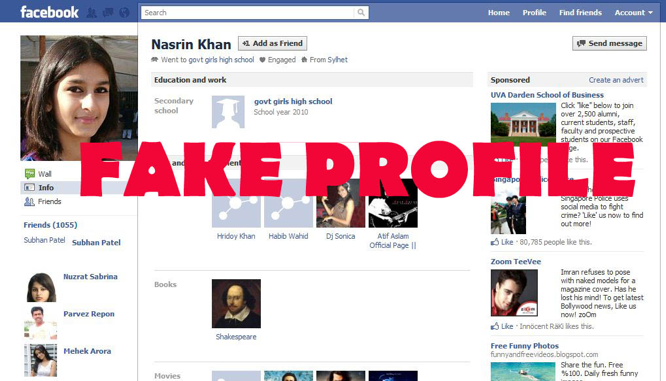
In a world where Twitter accounts for brands like Burger King, Jeep and Fox News can get hacked, HR professionals can never be 100 percent certain that comments and content posted to a candidate’s page or wall is authentic. There’s always a potential for an HR professional to find an impostor account and mistake it for a valid one and the possibility of misconstruing pictures, messages or other information posted when this content is posted by someone with a similar name.

So who conducts Social Media Background Checks?

Social media vetting is time-consuming for hiring managers to do themselves. The American Bar Association recommends hiring a third-party vendor to conduct the social media searches. An added bonus: “Most helpful, a third party’s web-crawler system can typically review more webpages than an individual hiring manager tapping away at individual websites like Facebook and Twitter,” the ABA states.

The Bottom Line

It’s important to note that social media background checks make it easy for employers to find out information that can be held against you when you’re applying for jobs. Be cautious of what you post on social media, blogs, and other internet sites. The chances of someone finding information that could be damaging to your career are high. Your best bet is to be careful about what you post and to presume that what you post is public, despite any privacy settings you may have.


About Us:

We have been mining social media since 2007 for our clients. By utilizing best in class software programs, we offer a service called eChatter.

eChatter works with you to obtain your objectives in a fast, accurate and reliable facet. By keeping our strengthened principals, yet evolving with this industry, we lead in social media monitoring. Since 2007, we have been dedicated to providing our customers with the most authentic data.


We offer:

·       Deep Web Scans

·       Jury Vetting

·       Jury Monitoring

·       Quick Scan

·       Social Media Screenings


www.e-chatter.net

(866) 703-8238