Social Media’s Role in Finding the Missing

Every three minutes a child is reported missing in the UK; across the EU that number rises to one child every two minutes.
In the US, the FBI recorded almost 467,000 missing children in 2014, which is close to one reported every minute
.

In the US, milk cartons, posters, flyers, and traditional news reports were the main missing child search channels until 1996, when Dallas-Fort Worth broadcasters teamed up with local police to develop a warning system that interrupted regular programming on television, radio broadcasts and highway signs. That service, Amber Alert, is used only for the most serious of cases, sending out messages via email, text, traffic signs and digital billboards, as well as through Twitter and Facebook.

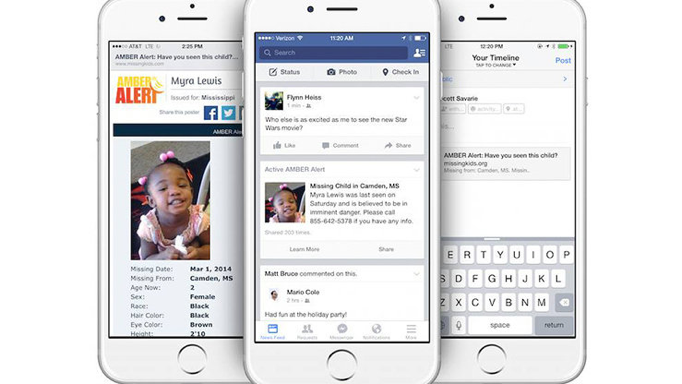
In 2015, Child Rescue Alert partnered with Facebook to harness the social network’s reach. Now, when a missing child case meets certain criteria of seriousness, law enforcement agencies can issue geo-targeted posts, containing a photo and description, to appear in the newsfeeds of Facebook users in the area where the child is believed to be.

Rachael Powers, a criminologist at the University of South Florida, says that social media has become “the new milk carton campaign” for police departments across the country, stressing the importance of publicity for missing persons cases. “It’s the difference between 40 eyes and 4,000 eyes,” she says.

“Time is often a crucial element when locating vulnerable missing people who are at risk to themselves or to the public,” says Metropolitan Police commander Alison Newcomb. “The use of social media supports our investigations and appeals and has achieved great results, some of which simply could not have happened through traditional communication channels.”

DC cops are also doing more to publicize the most critical cases. In December, the department began issuing press releases for every single “critical missing” person—defined as anyone under 15, over 65, or otherwise deemed to be vulnerable. Not every critical case had received a press release under the old system. This year, DC officials said at the press conference, 95% of the missing persons cases have been closed.

“If a person goes missing, commands make initial notifications on social media. Then posters are made,” said Zachary Tumin, deputy commissioner for strategic initiatives and leader of the NYPD’s social media efforts. “As that information gets retweeted by police and the public, word spreads very quickly to be on the lookout for that missing person.”

“First year results aren’t in yet, but I think we’ve been successful. We currently have hundreds of thousands of followers on Twitter and we have to take advantage of that going forward,” he said. The NYPD’s Twitter campaign comes three years after the creation of its Facebook page, which currently has more than 380,000 likes. Tumin expects all police officers to be issued their own smartphones in the next year or two; that will help them push out information quickly.

Before social media, spreading the word about the missing was hampered by limited outreach to those in direct position to help. Amber Alerts were mainly broadcasted on television, radio and on highways. Distribution of missing posters was also limited, only displayed in communities in which the individual was last seen and or lived.
Now, organizations like National Center for Missing & Exploited Children can increase the likelihood missing children are found thanks to more immediate and full-range awareness raised on Facebook, Twitter and Instagram. These social media platforms have 1.2 billion, 288 million and 300 million monthly active users, respectively.


missing kids and social media

“Our social media properties allow us the ability to geo-target our missing children’s posters. In doing so, we are able to reach people who may be in a direct position to help,” said Ashley Iodice, spokesperson for the National Center. In March, the non-profit ramped up video production across all its social media platforms and launched videos that feature family members of lost children. “We have found that video elements in the digital media space garner more viewership, which we believe will help in finding more missing children,” said Iodice.

Gavin Portnoy, head of digital media at the National Center for Missing & Exploited Children, which makes active use of Facebook, Twitter, YouTube, Instagram and Snapchat, has proof of the power of sharing. In 2015 the charity created a video appeal featuring imagery of a missing girl and the person they suspected had kidnapped her. The video was shared widely and a woman spotted them. “People feel empowered to make a difference; it’s the opportunity to do something,” he says. Portnoy, however, says that while he recognizes that social media is by no means a perfect tool, its benefits should be acknowledged. “It is another really positive tool that’s in the arsenal of the public, of law enforcement, of non-profits like us that are trying to help.”


About Us:

We will conduct a missing child social

media search for FREE anytime! 

We have been mining social media since 2007 for our clients. By utilizing best in class software programs, we offer a service called eChatter.

eChatter works with you to obtain your objectives in a fast, accurate and reliable facet. By keeping our strengthened principals, yet evolving with this industry, we lead in social media monitoring. Since 2007, we have been dedicated to providing our customers with the most authentic data.


We offer:

·       Deep Web Scans

·       Jury Vetting

·       Jury Monitoring

·       Quick Scan


www.e-chatter.net

(866) 703-8238


Fired for Posting on Social Media

When posting to any social media platform, it might help to think of all of it as potentially public. Remember that anyone can take a screenshot or copy and pass on your post without your knowledge.


There’s something about social media that enables users to say or do anything and think they can get away with it. Is it the fact that they are hiding behind a screen? Or maybe they are pretending to have an alter ego?

In the age of social media there’s a phenomenon that sees users across the world, broadcast messages to the masses that they might not actually say aloud. Whatever the reason, negative or inappropriate social media posts can have severe implications on your career and even your life.

Here are some examples of what not to do on Social Media if you want to keep your job.

1. Complaining about your Job

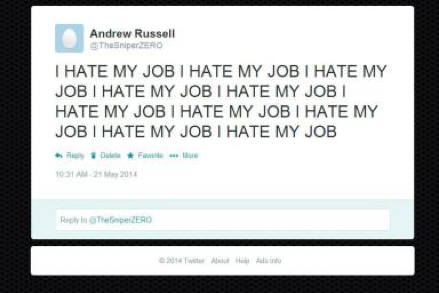
It seems like a no-brainer. If you complain about your job or make a derogatory or racist remark on social media, someone at your company is going to hear about it. It’s inevitable. Even if you delete it after the fact, the damage has already been done.
After securing a job at a pizza restaurant, Texas teenager Cella took to Twitter so her friends could know how much she dreaded her upcoming first day, calling it a “f*** a** job.” Her friends may have found it funny, but her new boss certainly didn’t. He replied to her on Twitter that she didn’t need to bother showing up; firing her before she even stepped a foot into her new place of employment. Ouch.

2. Political Opinions and Racist Remarks

Radical political opinions can get you in trouble no matter who you are, but when you vow to never follow orders from your Commander and Chief, and you happen to be a Sergeant, it can get you in real trouble. Former Marine Sgt. Gary Stein voiced his opinion on both the country and Obama in a highly negative Facebook post. This ended with a dishonorable discharge and some pretty huge life changes as he watched his career go down the drain.

Drawing all over your passed-out friends and posting the picture to social media is nothing new – but it becomes distasteful when you add a Nazi theme, swastikas and anti-Semitic words to your “art”. Caitlin Davis, a cheerleader for the New England Patriots, drew several symbols on an unconscious party-goer. When the photo found its way onto Facebook, fans and random viewers alike were understandably outraged – encouraging the Patriots to do the patriotic thing and fire Caitlin Davis.

3. On the Job Antics

One hospital in Wiltshire, England, didn’t share the sense of humor displayed by its employees when they took a few seconds out of their workday to lie down in strange places around their workplace, tagging it “The Lying Down on the Job Game.” When a few hospital employees decided to play along, they posted pictures of themselves lying around the hospital on the floor or even on the helipad. The higher ups decided if they had that much time on their hands, why not have more? They were all fired.

social media background checks


4. Involving Children

Daycare workers are bound to have bad days, and sometimes a large group of kids can wear your nerves thin. But this caretaker took it too far. Not only did they make an offhanded Facebook post complaining about their job, but they went as far as posting photographs of the children along with snide comments, which actually reached one child’s mother. Following this, the child’s mother immediately made justified complaints to the daycare, ensuring the employee was fired.

5. Criticizing Leaders

Elizabeth Lauten, communications director for the Republican Representative of Tennessee, apparently forgot the value of positive communication. Lauten criticized Obama’s two daughters by posting this on Facebook: “I get you’re both in those awful teen years, but you’re part of the First Family, try showing a little class”. She also criticized the morals of the President and First Lady, and ended her post with a final suggestion to “Act like being in the White House matters to you. Dress like you deserve respect, not a spot at a bar.” Her boss had a suggestion for her as well – apologize and then resign, which she did.

If you feel strongly about maintaining a social media presence and want to continue to voice your opinion, make sure that only the people you want seeing your posts are seeing them. Double check your privacy settings so only friends can see your Timeline. And pay attention to who you add as a friend.

A case study in Harvard Business Review pointed out that your privacy settings are null and void if you’ve friended your boss or your clients – both types of people could be offended by a political opinion or joke. Always think before you post.

Social media is part of your personal brand so you need to remember to keep it somewhat professional at all times. This doesn’t mean that you can’t have fun with your friends or vent from time to time but try to remember that nothing online is ever truly private.


Social Media and Insurance Crimes

Ever have a claim that’s just a little “off”? Something about it just doesn’t sit right. If you need to get to the bottom of it, you might end up hiring a private investigator to track down possible insurance fraud. One of the best places to start is in social media for insurance crimes!

Joseph Jones is one such investigator. The Californian PI and vice president of Bosco Legal Services solves cases through a mixture of extensive online searches and surveillance. The 30-year-old holds degrees in social and behavioral sciences and psychology, plus multiple certifications in open source and cyber intelligence.

“What we’re able to provide in the way of evidence, it’s so good. It started with your typical workers’ comp issue, where someone claims they have neck and back problems and they really don’t, or your car accidents. That’s like the bread and butter – those are the cases that come constantly.”

The firm gets deep into social media, spending hours trawling for information on a person, often through friends’ and acquaintances’ pages – searching for comments, pictures or videos that might incriminate the claimant.

Jones finds that social media users will post information for their friends that contradicts what they’re trying to claim from their insurers, including: vacations, physical fitness, social events, hobbies, employment, and potentially incriminating places they frequently visit.

Jones said 10-20 hours of targeted online investigations can often yield more than a week’s worth of surveillance. But when social media fails, there are always the private eye fall-backs, like tailing, watching, interviewing and doorknocking.


Need a clearer picture? Let’s start with a story. There was a young lady who slipped and fell in a retail store. She alleged multiple injuries, including permanently disabling back issues. Her lawsuit claimed that her life would never be the same, and she sought damages of more than $100,000 from the store.

With access to multiple media sites such as Facebook, Twitter, and Instagram, the social media investigator learned that the “horribly injured plaintiff” was a college cheerleader, softball player and highly engaged in her sorority – all current activities. Targeted surveillance was ordered which produced a comprehensive video of the individual’s activities, in full color and including a smiling, very active and very healthy plaintiff.


When the investigation was shared with the judge, the suit was dismissed. The case ultimately closed for $2,500 in paid medical expenses.

Sadly, there are thousands of stories like this. The Coalition Against Insurance Fraud in North America estimated $80 billion per year in insurance fraud in 2016. 2017 surveys by Insurance Research Council revealed that 24% of Americans believe it’s “ok to pad an insurance claim.”

Although insurance fraud is not going away anytime soon, today’s technology makes fraud detection and prevention a much greater reality, and social media investigations play a large role in that.

There are over 200 well-known social media websites with the top four being Facebook, YouTube, Instagram, and Twitter. 300 hours of video is uploaded to YouTube every minute of the day, with 400 million photos uploaded to Snapchat daily. Amazingly, people using these sites have no concerns about the content or what the content can reveal about their activities. And it’s all public information, there for the world to see.

When a Facebook post shows a claimant with a supposed knee injury in a bowling league, complete with pictures of scorecards, including dates and times, it’s not difficult to have an investigator at the bowling alley on league night, video camera in hand to confirm the activities. That’s the kind of material people post on social media. It’s an open book!

Social media investigations are an evolving tool in the fight against insurance fraud. Professional investigators are best equipped to handle this – they have the technology and the expertise that adjusters simply don’t have, along with the contractual obligation to defend clients in case of mistakes. This type of investigation is proving to be a valuable tool in the claim handling process.