COVID-19 Fraud: South Miami

Emerging scams due to the COVID-19 Pandemic.

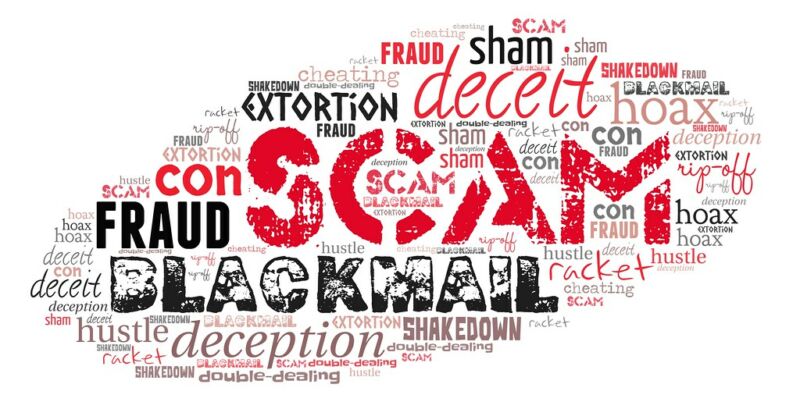
The scams have begun around COVID-19 and it appears to be just starting. When people are hit with diversity, sadly we begin to see the good, the bad, and the ugly. In fact, Americans have lost over 12 million dollars to Coronavirus scams already. The concentration in South Miami has been because of numerous complaints. This alerted the US Attorney’s Office to launch a task force in connection with local authorities to combat this growing problem.

Education is the best defense and law enforcement is doing just that with a series of community alerts, media reports and social media posts. Alerting the public to the risks early in an attempt to counteract the schemes.

In one of our latest blog posts, Crime Never Sleeps COVID-19 Online Schemes & Insurance Fraud, we alerted our Private Investigators to what we were seeing as emerging trends in the insurance industry. Below, is a set of scams targeting individuals.

Here are some examples of COVID-19 scams, reported by Sabrina Lolo, of West Palm Beach News:

  • Unlawful Hoarding and Price-Gouging: The Department of Health and Human Services (HHS) has designated certain health and medical resources necessary to respond to the COVID-19 pandemic as “scarce,” including respirator masks, ventilators, and other medical protective equipment. These designated materials are subject to the hoarding prevention measures that trigger both criminal and civil remedies.
  • Testing Scams: Scammers are selling fake at-home test kits or going door-to-door performing fake tests for money.
  • Treatment Scams: Scammers are offering to sell fake cures, vaccines, and advice on unproven treatments for COVID-19.
  • Supply Scams: Scammers are creating fake shops, websites, social media accounts, and email addresses claiming to sell medical supplies currently in high demand, such as surgical masks. When consumers attempt to purchase supplies through these channels, fraudsters pocket the money and never provide the promised supplies.
  • Provider Scams: Scammers are also contacting people by phone and email, pretending to be doctors and hospitals that have treated a friend or relative for COVID-19, and demanding payment for that treatment.
  • Charity Scams: Scammers are soliciting donations for individuals, groups, and areas affected by COVID-19.
  • Phishing Scams and Cyber Intrusions: Scammers posing as national and global health authorities, including the World Health Organization (WHO) and the Centers for Disease Control and Prevention (CDC), are sending phishing emails designed to trick recipients into clicking on a link or opening an attachment that downloads malware that steals the user’s credentials, such as usernames, credit card numbers, passwords, and other sensitive information usually stored in internet browsers.
  • App Scams: Scammers are also creating and manipulating mobile apps designed to track the spread of COVID-19 to insert malware that will compromise users’ devices and personal information.
  • Investment Scams: Scammers are offering online promotions on various platforms, including social media, claiming that the products or services of publicly traded companies can prevent, detect, or cure COVID-19, and that the stock of these companies will dramatically increase in value as a result.
  • Stimulus Check Scams: Scammers are contacting people over email and are telling them that their check, as part of the stimulus package responding to COVID-19, is already waiting for them and that all they need to do is to provide personal information, such as bank account numbers and Social Security Numbers, which are the key pieces of information needed to perpetrate identity theft.
  • Other scams include fraudsters claiming to work for the government or banks/credit cards and offering assistance for student loan relief, foreclosure or eviction relief, unemployment assistance, debt relief, and direct financial assistance, like government checks.

Anyone who believes they were a target or victim of fraud, or knows about any hoarding or price-gouging of critical medical supplies, is asked to report it to the National Center for Disaster Fraud Hotline at 1-866-720-5721 or disaster@leo.gov.

A Private Investigator’s View of Social Media Intelligence

I am pleased to share with you our first guest blog post. It is written by Larry Forletta, owner of Forletta Investigative/ Security Consulting. As a former DEA agent, Larry Forletta has established many resources in the United States and abroad.

Social media investigations have changed the investigative landscape for private investigators.The forensics have been learned through a series of trial and error, utilizing some of the most popular social media platforms in order to gather essential evidence under the laws of collection. Those who work in this department are sometimes referred to as social media
vendors. However, not all social media forensics are the same and they certainly don’t produce the same results every time.

The effective use of social media has aided many investigations already. One investigation that comes to mind is an attempt to extort money from an individual involved with prostitution. By investigating through social media, the individual’s full identity (including name and base of
operations in the U.S.) was able to be identified. This investigative information was then provided to state authorities who were further able to identify the prostitution extortion individual.

It’s quite amazing what people continue to share on social media platforms. Despite the fact that there can be real consequences for what gets posted online, even if it might seem like fun and games, people continue to post sometimes incriminating and hard evidence that can be used against them. Americans spend more time using social media platforms than any other
internet activity, such as email. Most online evidence is compiled manually by an investigator who might screenshot or archive as needed. If something was sent or posted, perhaps even published, then it can be found and used accordingly.

Even when posts are deleted, they never really go away. Emails can be trashed, and accounts can be removed, yet the data and imprint of what has been put online may be able to be resurfaced with a little help. After all, a private investigator is only as good as their resources.

Our primary social media associate is eChatter, an online global source for social media researchers. They are spearheaded by their president, Kathy Doering, and specialize in a multitude of services including deep web searches and dark web searches. They are professional, communicative, and will get the answers that you need.

Wait…Where Did That Social Media Post Go?

What happened to that social media post you saw yesterday during your recent online investigation? Are you kicking yourself that you did not capture that post when you saw it? It can happen and very often does. The old adage, what is here today, is gone tomorrow, is something that happens all of the time, especially in social media. It may suddenly be changed from “public” to “private” at any point. The user’s entire profile can be deleted at any time. Where will that leave you and your investigation?

Largent V. Reed

Back in 2011 this was not an issue as social media was just starting to grow. In a personal injury lawsuit, Largent v. Reed, the plaintiff claimed that a recent accident had left her with severe physical and mental pain. During the trial, defendants presented her post-accident photos posted to her Facebook profile. These photos revealed the plaintiff was clearly feeling well enough to engage in her daily activities and exercising at her gym on a regular basis.

Fast forward to 2020 and things have changed. People are more aware of what they post and use user names that are different than their real name. Let me give you a recent example. One of our clients requested a deep scan from us for a case that involved fraud. We conducted the scan and produced the report capturing the subject’s Facebook account. Scans include live URL’s as well as screen shots showcasing all publicly available data. Once given to the attorney, he had a question about one of the posts specifically. When attempting to click on the link within the profile post, he came to a dead end. We did capture a screenshot, which in most cases is sufficient for investigative purposes. However, time is critical when conducting this type of research. Looking a little more closely at one of the posts was no longer possible.

Web Preservation

Preserving digital data is something many attorneys are starting to take a serious look at and in some cases are requesting from their private investigators. Judges are getting stricter when it comes to allowing social media as evidence in court. Not all cases make it to court of course, but preserving social media may be that extra step that your clients may want you to take.

Social media posts can be altered quickly, often at the advice of opposing counsel. Be sure not to wait too long to capture the data you need and in some cases, be sure to preserve that data.

How to Find Someone in Prison

Before you start your search for someone in prison it is important to know some important terms.

Prison – also known as a penitentiary or correctional facility, is a place in which individuals are physically confined and are deprived of a range of personal freedoms. Individuals held within prisons and corrections facilities have been either charged with a crime or convicted of a crime. Individuals who have been charged with a crime are incarcerated until they are brought to trial or released. Those who are officially charged with a crime will remain in a prison or jail facility until they completed the duration of their sentence.

Inmate – a person confined to an institution such as a prison (as a convict) or hospital (as a patient).

Corrections – refers to the supervision of persons arrested for, convicted of, or sentenced for criminal offenses.

How Do You Find Someone in Prison?

1) Try using the website Vine. VINE is a website that lets victims of crime and other concerned citizens access information about offenders. The service is available via the website, a mobile app, and a toll-free number. Victims can register to receive alerts about inmate status changes via phone, email, and text.
To find an offender, click on the “Find an Offender” icon and select the appropriate state. From the next page, enter the incarcerated person’s last name and first name. Alternatively, you can enter their inmate ID number, if you have it. In addition, you can click on the “Advanced Search” link to add other search parameters such as Facility Name, Date of Birth and Age Range.

2) Another option is CheckPeople.com. This website makes it fast, easy, and effective to perform an advanced people search. You can track down old friends, relatives, or classmates. All you need is the person’s first and last name but you can narrow down the search if you know what state they are in. Search results will reveal detailed information including criminal records, civil records, marriage license(s), and more.

How to Find an Inmate in a Federal Prison

To find someone in a federal prison, use the Federal inmate locator. This search tool allows you to search a database of federal inmates who were incarcerated from 1982 to present. Once you find the individual, you can use the Federal prison facility locator to learn more about the specific facility where they are being held. This search provides the details on such things as the type of prison and the security (e.g. minimum security, maximum security, etc.).
You can lookup inmates two different ways:

1) First and last name (required) and middle name, age, race, sex (optional)

2) Inmate number from the: Bureau of Prisons (BOP) Register, D.C. Department of Corrections (DCDC), Federal Bureau of Investigation (FBI), or Immigration and Naturalization Services (INS)

How to Check an Inmate’s Background

If you need to learn more about someone who is incarcerated, a BeenVerified Background Check Report allows you to search billions of public records online in just a few seconds. You can search for criminal records, arrest records, bankruptcies and more. In addition, you can find people using address, phone number and email search. BeenVerified offers an easy and affordable way to run a background check.

Federal Prison Records 1982 – Present

The Bureau of Prisons (BOP) maintains records of federal prisoners released after 1982. You can use the Inmate Locator to find out when a prisoner was, or is expected to be, released. To learn more about an inmate, submit a Freedom of Information Act request to the BOP. Also include a completed Form DOJ-361 (PDF, Download Adobe Reader).
The BOP Library provides a wealth of resources on corrections, criminology, and related fields.
State and Local Prison Records
For state and local prison records, contact the state or local corrections department.
Prison and Prisoner Resources
Following are resources for prisons, correctional institutions, jails, and inmate searches.
Amnesty International – Amnesty international is a global network of human rights activists who campaign to end abuses of human rights. Their website provides resources, news, and data on human rights abuses around the world.
Corrections Connection Network – Provides news, data and vendor intelligence for the corrections community. Provides resources, tools and forums for corrections professionals. Also a great place to stay in touch with the latest news about what is going on within the system. Includes links to inmate locate queries for each state.
PrisonMap.com – PrisonMap.com shows aerial photos of prisons in the United States.
Prison Policy Initiative – Attempts to document the impact of mass incarceration on individuals and communities in an attempt to improve the criminal justice system. The organization produces cutting edge research to expose harm created by mass incarceration and then sponsors advocacy campaigns to create awareness about the issues.

About Us:
We have been mining social media since 2007 for our clients. By utilizing best in class software programs, we offer a service called eChatter.
eChatter works with you to obtain your objectives in a fast, accurate and reliable facet. By keeping our strengthened principals, yet evolving with this industry, we lead in social media monitoring. Since 2007, we have been dedicated to providing our customers with the most authentic data.

We offer:
• Deep Web Scans
• Jury Vetting
• Jury Monitoring
• Quick Scan

www.e-chatter.net
(866) 703-8238