Why Cross-Referencing Matters
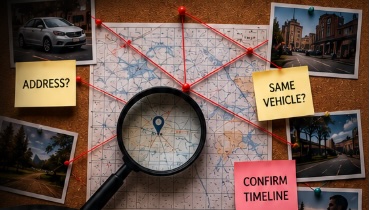
In the world of Open-Source Intelligence (OSINT) and Social Media Intelligence (SOCMINT), collecting information is only the first step. The real value comes from validating that information through multiple independent sources. A single data point can be misleading, outdated, or intentionally deceptive. However, when several unrelated sources independently confirm the same information, investigators can have much greater confidence in their findings.
Professional investigators understand that successful investigations are built on corroborated evidence—not assumptions.
What is Cross-Referencing?
Cross-referencing is the process of comparing information obtained from multiple sources to determine its accuracy, reliability, and relevance.
For example, a subject’s LinkedIn profile may list a current employer. Rather than accepting this information at face value, an investigator should compare it with:
- State business records
- Professional licensing databases
- Public court filings
- News articles
- Company websites
- Social media activity
- Archived web pages
- Property records
Each source either strengthens or weakens the credibility of the information.
Best Practices for Cross-Referencing Data
1. Define Your Investigative Objective
Before collecting information, determine exactly what you are trying to prove or disprove.
Examples include:
- Verifying employment
- Confirming a current residence
- Identifying associates
- Establishing a timeline
- Locating hidden business interests
- Confirming travel or locations
A clear objective prevents information overload and keeps the investigation focused.
2. Never Rely on a Single Source
One source rarely tells the complete story.
Instead, compare information across several independent sources.
Good examples include:
| Information | Cross Reference With |
|---|---|
| Social media post | EXIF data, Google Maps, weather history |
| Business ownership | Secretary of State records, LinkedIn, company websites |
| Vehicle | DMV records (where available), photos, insurance claims |
| Phone number | People search databases, messaging apps, breach data |
| Email address | Social media, breach databases, domain registrations |
The more independent confirmations you obtain, the stronger your conclusions become.
3. Verify the Source Before Trusting the Information
Not every source deserves equal weight.
Evaluate:
- Who published it?
- When was it published?
- Has it been independently verified?
- Could the information be outdated?
- Is there evidence of bias?
Government records generally carry more weight than anonymous forum posts.
4. Build a Timeline
One of the most valuable investigative techniques is organizing events chronologically.
Create a timeline showing:
- Employment history
- Address changes
- Social media activity
- Court filings
- Business registrations
- Vehicle purchases
- Property transactions
Timelines often expose inconsistencies that individual records never reveal.
5. Compare Different Types of Data
One of the strengths of OSINT is combining multiple forms of intelligence.
Examples include:
- Photos
- Videos
- Metadata
- Maps
- Public records
- Social media interactions
- Archived websites
- News articles
- Court documents
Each piece of information provides context for the others.
6. Look for Corroboration, Not Confirmation
Confirmation bias is one of the greatest risks in investigations.
Rather than looking for information that supports your theory, actively search for information that disproves it.
Professional investigators ask:
- What evidence contradicts this?
- Could there be another explanation?
- Is there a better source?
Objectivity leads to stronger intelligence.
7. Document Every Source
Every finding should include:
- Source name
- URL or document reference
- Date accessed
- Screenshot or archived copy (when appropriate)
- Notes explaining why it supports the conclusion
Proper documentation ensures your findings are defensible if questioned later.
Example of Effective Cross-Referencing
Imagine a subject claims to live in Dallas, Texas.
Rather than accepting this claim, an investigator might compare:
- Facebook check-ins
- Instagram photos
- LinkedIn employment
- Property ownership records
- Secretary of State filings
- Google Street View imagery
- Court records
- Business licenses
- Professional licenses
- News mentions
Conclusions
Cross-referencing is one of the most valuable skills an OSINT or SOCMINT investigator can develop. While collecting information is relatively easy, validating that information through multiple independent sources is what transforms raw data into reliable intelligence.
By following a structured process—defining objectives, verifying sources, building timelines, documenting findings, and corroborating evidence—you can produce investigations that are accurate, defensible, and actionable.
At eChatter, our investigators use these best practices every day to support legal professionals, insurance companies, corporations, and private investigators with reliable, evidence-based intelligence.