The Pros and Cons of Social Media Background Checks

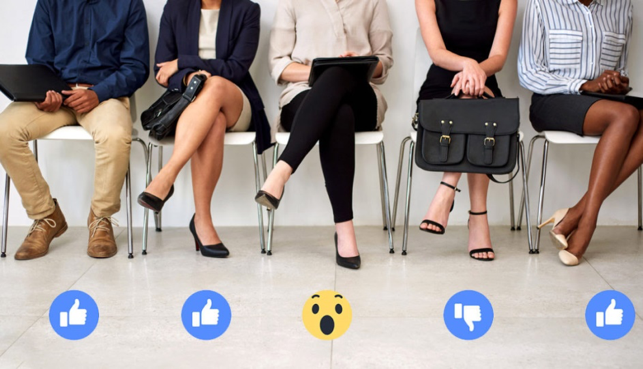
You are in the process of interviewing candidates for a position and you have narrowed it down to your top 3. Typically you conduct background checks by calling references and verifying previous employment. But in today’s world where everything revolves around social media, it’s no surprise that Human Resources departments are turning to social media platforms to check their candidates’ backgrounds before making any hiring decisions.

Let’s take a look at the Pros and Cons of conducting social media background checks:

Advantages

1. Easy Background Check

Social media screening is a cheap way for a background check, the employer can access them anywhere they are and can make an immediate decision of hiring the candidate. It saves a lot of time to learn about the candidate through Facebook and LinkedIn profiles and does not require any additional money to be spent. Facebook posts are an easy insight into the candidate’s day to day life; Twitter is good to learn about how opinionated they are or about their personal thoughts. On the other hand, LinkedIn is good to learn about their professional makeup. With so many aspects available on the web, it is easy to know about the candidate in a complete way.

2. Eliminating Discrepancies

Social media background checks are a good way to confirm information on a candidate’s resume. Social media sites often provide information on the user’s previous occupations and work history. You can compare to see if there are any discrepancies in the resume they submit for the open position. A candidate may also claim to be an expert in a specific subject matter or have participated in certain volunteering efforts. Most of this information can be confirmed online on their social media platforms.

3. You Learn Who Your Candidate Really Is

Why do people tend to be more open and vulnerable on social media? Whether on Facebook, Instagram, or Twitter, users often let their guard down and are completely honest. Whatever the reason, this can prove to be beneficial to HR because few candidates feel free to truly be themselves in such a formal and high-pressure environment. During the job interview the candidate tends to put up the best foot in every aspect, hence, it does not provide the complete picture as to how a candidate will behave on a day to day basis at work.

But looking at online profiles can tell you what someone is passionate about or how they treat other people. It can also help you spot red flags. Does your candidate have a habit of ranting about her boss and colleagues online? Does an applicant who seemed friendly in the interview crack racist or sexist jokes on Twitter?

The information revealed by a social media background check is rarely essential to the hiring process, but in some cases, it can help you spot major red flags about a person’s character. Respect for others is always the main agenda for an employer that they look in a candidate and this information can easily be found in social media space. Someone who badmouths a company or spouts off derogatory remarks online is not a good ambassador for your brand and is probably someone you want to pass over when you are hiring.


Disadvantages

  1. Legal Risks

While your social media background screening may seem innocent and purely professional, you could be exposed to potential legal risks in terms of privacy and human rights should your background screening methods be used against you. The legal risks may arise from the public information you gathered about the candidate.

For example, a candidate might list his age, race, religion, or sexual orientation as part of a Facebook profile. Whether you want to admit it or not, subconsciously learning this information about an applicant may affect how you feel about them. Hiring managers are at full liberty to have their own opinions about sensitive political, religious, and lifestyle matters, however, the second those opinions influence a hiring decision, they become discrimination.

  1. Privacy Settings

Most social media sites allow users to adjust the privacy settings on their profiles. Smart candidates are more careful with what they post online. With this knowledge, candidates can easily create a social media profile that works to their advantage and HR has no choice but to accept what can be seen publicly as the truth. Be mindful that what you see is not always what you get.

  1. You Might End Up Wasting Time

One of the biggest problems with social media background checks is that it’s unpredictable. Finding people on Facebook, Twitter, or LinkedIn can be a challenge if you don’t share any connections or mutual friends. And even if you do find your candidate, privacy settings on social platforms can make it impossible to view their posts. Social media background checks can end up being a lot of work for potentially no return.

Conclusion

If you’re thinking about browsing the social media profiles of your top candidates, you need to consider both arguments before deciding.

Always run other types of background checks regardless of your position on social media background checks. Social media can tell you more about a person – from general likes and dislikes to character details – but it can’t replace traditional and trusted background check sources such as criminal screenings and employment verification checks.

If you ever decide to use a candidate’s social media profile for hiring purposes – whether to find contact information or to run a full-blown social media background examination – have someone other than the hiring manager do the work. Looking at a Facebook page can unintentionally reveal too much information – as such, it’s a good idea to have a person uninvolved with the hiring manager look through the applicant’s social accounts and prepare a report of relevant or potentially relevant information. This person can act as a filter, keeping information that might create a bias out of the hands of the hiring manager.


About Us:

We have been mining social media since 2007 for our clients. By utilizing best in class software programs, we offer a service called eChatter.

eChatter works with you to obtain your objectives in a fast, accurate and reliable facet. By keeping our strengthened principals, yet evolving with this industry, we lead in social media monitoring. Since 2007, we have been dedicated to providing our customers with the most authentic data.


We offer:

·       Deep Web Scans

·       Jury Vetting

·       Jury Monitoring

·       Quick Scan


www.e-chatter.net

(866) 703-8238


Social Media Employee Training Guide

Do what today others won’t, so tomorrow, you can do what others can’t.
― Brian Rogers Loop

This adage applies to many things in life, but is especially true when it comes to social media. Once something is posted in social media, its hard to unsee what you have seen.

By now many businesses have realized that proactively listening to brand mentions online is a smart thing to do at a relatively low cost. Social Media Management firms can handle this for you, making sure you don’t miss a beat on the web. The one area that is a little harder to track is your employees. It may be time to educate your employees on the importance of projecting a positive presence in social media not only for their own career, but for the reputation of the company they work for.

One recent example is of an employee of Little Cesars posting in social media about a customer. On May 30, 2018, an employee posted not only a vulgar message about the customer, he posted her picture on Instagram. The customer got home and  her 16 year-old daughter told her she was on Instagram! The customer then called her local news channel and the rest is history!


social media

So, where do you begin? The first place to begin is with your social media marketing department. Check out what they are seeing in their social media listening. Are they capturing any employee posts about work? Most likely this is hard to find by simply monitoring the brand name. Most times an employee will not mention the brand name in the post. In the case of Little Caesars, the employee used “lil caesars”, which should be added to keyword searches in their monitoring software.

We suggest incorporating social media policies into your training program. Use stories like the one above ( there are several of these on the internet you can find as well) as a way to showcase what not to do. Stories stick in the human brain much more and make a much bigger impact on a new employee.

Asking employees not to post anything with regard to their job is not out of line and can be incorporated into a confidentiality agreement too. Setting up guidelines upfront on what is acceptable will save you a lot of problems down the line.


The Importance of Media Monitoring for Businesses


As more individuals use social media and post online reviews, online reputation management
is necessary to the success of a business.


social media listening


Corporate America has embraced media monitoring. With the growing popularity of social media, third-party reviews websites, blogs, and other digital platforms, maintaining a solid online reputation is necessary for businesses. Media monitoring provides public feedback on the company, its brand, products, and customers and can help head off any public relations crisis. This could potentially save a company’s reputation online and in the public eye.


Clutch, a third-party reviews website for B2B agencies, surveyed 224 digital marketers above the age of 18 and located in the United States. Survey respondents must be employed by a company of more than 100 employees, responsible for day-to-day digital marketing activities, and allocate time and financial resources to online reputation management.


So what can we learn from this survey?

1. Digital Marketers Recognize Online Reputation Management as Necessary to Their Business

54% of digital marketers consider ORM “very necessary” to their company’s success. But according to Ryan Goff, chief marketing officer and social media marketing director at MGH, Inc., an integrated marketing communications agency in Maryland, 100% of companies should dedicate their attention to ORM,. “I was shocked to see that only 54% of executives thought that online reputation management was a necessary function of their business,” said Goff. “As someone who’s played in this space for 11 years, I see it as beyond very necessary. I see it as absolutely critical.”

Online reputation management is critical for businesses to maintain a positive brand identity in the eyes of consumers. As more digital marketers understand the value of ORM in growing their business, they choose to devote more time and energy toward monitoring their brand online.

2. Businesses Monitor Their Online Reputation Frequently

More than 40% of digital marketers monitor their companies’ brand daily, while 21% monitor their online reputation every hour. Because online content circulates rapidly, how people perceive brands can change within seconds. For this reason, businesses always should track what’s being said about them online.

A single negative media mention can damage how people perceive their company. Simon Wadsworth, managing partner at Igniyte, an online reputation management agency in the UK, points to negative media content as a reason why brands lose potential customers. “When people search for brands online, they tend to search for stamps of credibility,” said Wadsworth. “If they find anything negative, that could end up being a significant amount of leads that the business won’t get from people who are put off from using the service.”

By frequently monitoring media mentions, companies can avoid the potential loss of a significant amount of new business leads.

3. Businesses Consider Social Media Most Important Platform for Online Reputation Management

Although there is a plethora of outlets that businesses must be aware of when monitoring their brand online, 46% view social media as the most important platform for monitoring online reputation. Social media gives individuals free-reign to post about their experiences and opinions and this freedom limits the control companies have over their brand reputation.

“You can do everything in your power to boost your reputation on standard search engines like Google or Yahoo by building domain names and creating content. Social media, however, is uncontrollable,” said Juda Engelmayer, president and partner of HeraldPR, a full-service public relations and communications agency in New York. “People can tweet whatever they want, or they can go to Yelp or Facebook to post about a bad experience. This can have a huge effect on search engines.”

However, the rise of social media also presents some benefits for businesses. Social media gives companies the opportunity to converse firsthand with customers, according to Shannon Wilkinson, CEO at Reputation Communications, a reputation management agency in New York. “Social media enables companies to participate in conversations about their products, services, and industries. It also enables them to monitor those conversations to ensure they can be a part of them,” Wilkinson said.

With social media, businesses are able to react and respond quickly to consumers’ inquiries or comments, enabling them to take part in a conversation that might not be available on a blog or reviews website.

reputation management

  1. Businesses Must Devote Resources to Online Reputation Management

To mitigate the threat of damaging their brand reputation, businesses must devote resources to ORM as a part of their digital marketing strategy.

  • In-house resources are a preferred option for monitoring online reputation because employees are familiar with their company and can devote time to spreading a positive online brand image at a lower cost to the business.
  • Online reviews sites also are an important resource to collect positive feedback from users who have experienced their product or services. Half of the businesses surveyed (50%) rely on third-party, online reviews sites to monitor their brand reputation.
  • Social listening tools, many of which are free, are another way for businesses to monitor their online brand reputation. Tools such as Google AlertsReputology, and Yextcan be set up easily and at no cost to businesses that simply are looking for a tool that will notify them when their brand is featured negatively online.
  • Businesses derive the most value from allocating resources to ORM when they work with a professional agency, according to Andy Beal, the “Original Online Reputation Expert” at Reputation Refinery, a boutique online reputation management firm in North Carolina. “It comes down to expertise. External agencies are experts in knowing where to look, helping you understand who your influencers are, which channels to focus on, what keywords to monitor, and what types of sentiment to look for,” Beal said.


About Us:

We have been mining social media since 2007 for our clients. By utilizing best in class software programs, we offer a service called eChatter.

eChatter works with you to obtain your objectives in a fast, accurate and reliable facet. By keeping our strengthened principals, yet evolving with this industry, we lead in social media monitoring. Since 2007, we have been dedicated to providing our customers with the most authentic data.


We offer:

·       Deep Web Scans

·       Jury Vetting

·       Jury Monitoring

·       Quick Scan


www.e-chatter.net

(866) 703-8238