The Online Personality of Your Subject

Is the online personality of a person different from their in person personality? I recently watched a documentary on Netflix called, “Crime Scene: The Vanishing at the Cecil Hotel.” The docuseries is about a Canadian college student, Elisa Lam, who was a guest of the hotel in 2013. She disappeared and was missing for a period of time around some very unusual circumstances. I won’t tell you anymore, in case you want to watch it.

Her Tumblr account was an open book. Tumblr is a social media platform that was very popular during this time frame. Elisa Lam used it like a diary and in the documentary it is explained in detail what was obtained from the scrubbing of that open source information (OSINT). Her personality came through loud and clear through analyzing her social media posts.

Online Personality

When it comes to pulling online activity from social media, blogs, forums, etc. on your person of interest, personality plays an important role. Everyone in the investigation’s field knows that a person who is narcissistic for example, will provide you with a treasure of information online. In some cases, perhaps even more than you might need.

But what about all those people in between? People approach social media differently and there are many factors to be considered.

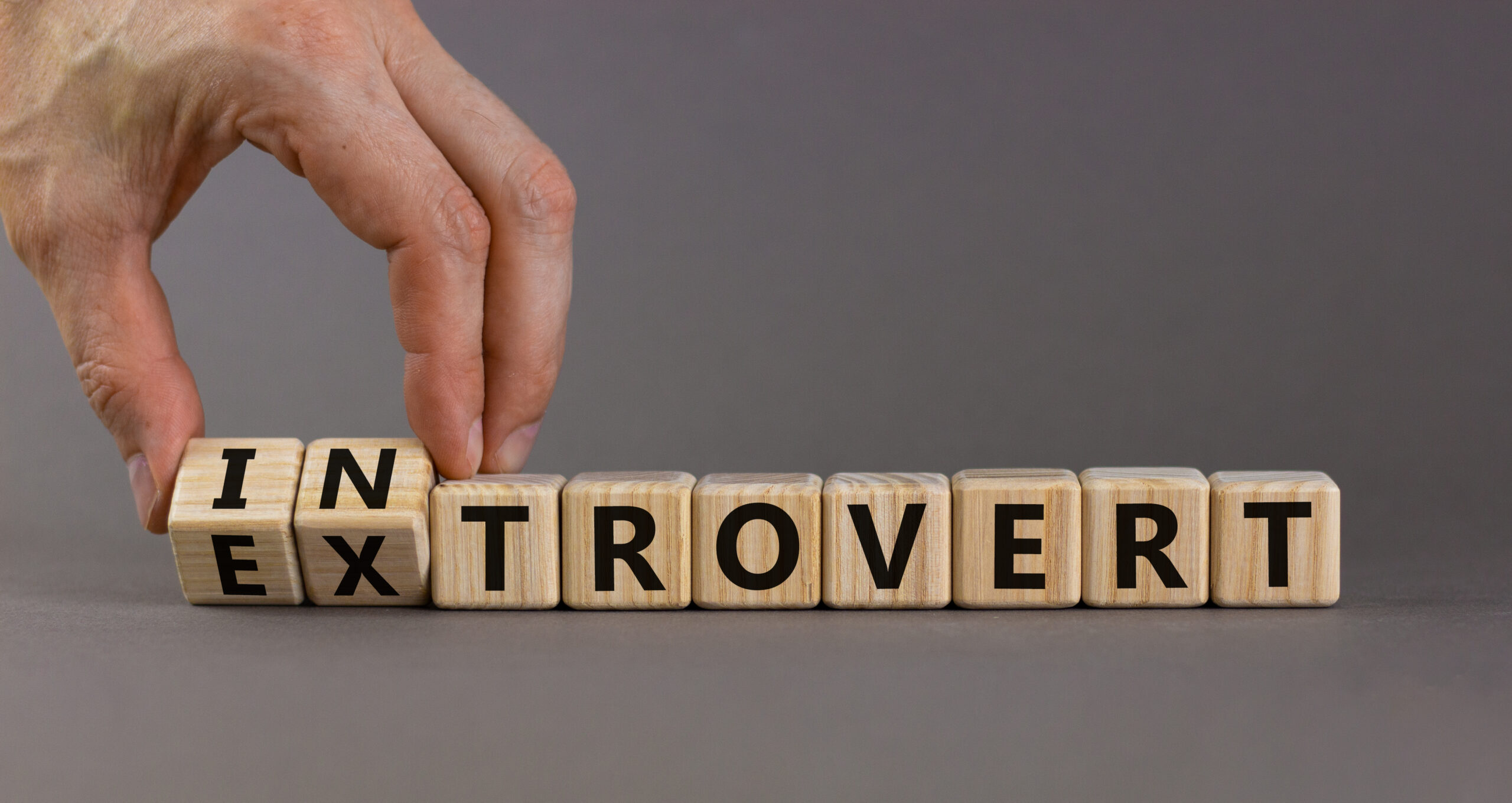
Two Major Personality Differences

One would think that an introvert would be non-social but that is not necessarily true. Consider some actors or comedians. Most seem like extraverts by the way they conduct themselves publicly. However, when interviewed, many of them say they are more introverted.

What are some common traits of Introverts?

  • Introverts in social media care about their privacy.
  • They tend to only accept friend requests from people they know.
  • They really don’t care about the number of “likes”.
  • Most likely unaware of friend requests.
  • Will unfollow or delete you.

What are some common traits of extraverts?

  • Extraverts don’t worry about their privacy.
  • They are more inclined to accept invitations from people they don’t know.
  • Extraverts care very much about the “likes” & shares.
  • They do pay attention to friend requests.
  • Most will keep all of their connections close.

 From a psychology point of view we can take a look at “Introvert vs. Extrovert: A Look at the Spectrum and Psychology.  The article points out the following. “How extroverted we are can have a huge bearing on our day-to-day life across a multitude of contexts and it’s important to note that there’s no ‘better’ level of extroversion/introversion – both ends of the spectrum have their advantages and disadvantages but by understanding where we fall on the scale we can address areas in which we’re perhaps lacking.”

Personality predicts what people do on social media.

A large body of research on social media use and personality has focused on the Big 5 personality traits, the most widely accepted trait theory. When people are asked to rate how much different traits characterize them, those traits cluster into five groups:

Knowing and understanding some of this may be of help in your next investigation. It is well worth it to take a look at your subject’s online activity to reveal glimpses into their personality.

The “Must Have” to the “Nice to Have” in Social Research for OSINT

In the world of online research, social research, OSINT, etc., information falls into two main social research categories. In one group you have the “Must Have” and the other is the “Nice to Have”. Let me explain.

Let’s take a look at this from the viewpoint of information collected on a person of interest.

Must Have: Facebook

Facebook intelligence is still in the “Must Have” category. In part this is due to the fact that there is still so much to discover there, if you know how and where to dig. That is the challenge!

  1. Groups: Sometimes people will showcase their groups and sometimes this information is kept private. If it is kept private, there are search techniques that can be used, but it is not easy. Sometimes this information is readily available on a person’s profile page. When it is, and the group is public, I would suggest taking some time to do a manual search.
Facebook Groups

What Can You Find?

When people post in Groups, I really think that most have a mindset that it is undiscoverable information. Meaning, it is safe within the constraints of the group. That may give a false sense of freedom to speak their mind or to post something that they wouldn’t want the majority of their friends to know. When viewing a person’s page, public posts may give an impression of being squeaky clean but posts in a group setting can reveal the opposite.

Recently, we conducted a scan on a person who from their two facebook profiles, looked to be pretty clean cut. After digging further, we came up with a series of posts that showed a very different side to the individual.

Facebook Post
Post of a person of interest in a Group

In case you are unfamiliar with the term, “wake and bake” it can be described as getting up in the morning and partaking of the drug of choice, without leaving the comforts of one’s bed. (urban dictionary).

Enough to toss that squeaky clean image right out the door!

Twitter:

If you are having trouble finding information online, one suggestion is to turn to Twitter. Is the person currently employed? By whom? What about past jobs? It may be worth it to scan the company’s Twitter pages because many mid to large size companies will post events, fundraisers, blogs, videos, etc. which have employees present.

We recently found several photos of an individual from their company’s Twitter page.

Nice to Have

There is quite a lot of information that can be filed under the “Nice to Have” social research category. When conducting a deep web scan for example, we may find out that the person had some past problems with the law. From simple traffic violations to bankruptcies and everything in the middle. This may date back 10 or more years.

While it may not be important to the case, it is something that is part of the person’s past. Voter registration, financial contributions to a particular political party, volunteer work, newspaper articles, digital records of all kinds, and so on. All of this additional information can help to give you a good picture of the character of the person.

UCC filing
Person had a possible DEA Controlled Substance License that expired in 2015

A piece of information like the one above can be useful in many ways. Perhaps you know the person to be a Veterinarian or he was one in the past. This piece of information can serve as another data point that confirms his profession. It may list an address or name of a business that you didn’t have before.

It can help you to eliminate false positives in your research as well. Without the help or assistance of multiple software platforms, you can easily get two people confused who share the same name.

Don’t forget Hashtags!

Have you used hashtags in your online investigations? What is the first thing that comes to your mind when you hear the word hashtag or see the symbol (#)? Do you think of Twitter? Or maybe Instagram, LinkedIn, or even Facebook? Social media users notice hashtags within posts. Some users follow hashtags. Some create them for political purposes. Others use them to track an event or even to make a point. Millions of hashtags are used in Twitter alone each day.

What Makes Up a Hashtag?

A hashtag is simply a keyword phrase, spelled out without spaces, with a pound sign (#) in front of it. Wikipedia calls it a type of metadata tag used on social networks. Looking for the sale of a certain drug in social media? Search the hashtag. Be sure to gather the street names the drug uses, so you get a full picture.

How else can this be used in your investigations? If you are working a high profile criminal case you will want to include this in your research. I would recommend starting in Twitter. If you find a fair amount of information there, I recommend using Tweet Deck and build yourself a dashboard. This will allow you to keep track of any developments using relative hashtags in real time.

Once you have located some good hashtags related to your case, cross reference them in other platforms. Not only will it potentially produce some good information (who, what, where and why), it may also allow you to search photos attached to the post for other possible clues.

Case Study: Hashtag Led to Username

A recent scan we conducted on a person of interest came up empty. Using multiple software platforms as well as good old-fashioned hunting, led to nothing. While searching, we found an important hashtag. By researching the hashtag in each social media platform, we located our person of interest. The username was such, that is just didn’t get picked up by any software platform. It was a very unique variance of this individual’s real name. From there we found a very public profile of the subject.

It is just another example of using hashtags in online research.

Hashtags to Try for Investigations

Take a look at some interesting hashtags next time you are in Twitter. One of the best is #breakingnews. This hashtag can quickly bring you up to speed on news breaking in the moment.

There are so many more, as the photo below showcases.

Photo: https://ritetag.com/

Employees’ Rights & Social Media

Employees and social media have been a sore spot for employers over the years. Back in the early years of social media, many employers were concerned about the amount of time employees spent in social media during an average work day. Their concerns centered around productivity, rather than what the employees were posting about.

Fast forward to 2020, and we have an entirely new set of problems. During the COVID-19 pandemic, essential worker’s were posting all over social media about their work conditions and at that time lack of PPE. Everyone knows that if you want to get your concerns noticed, turn to social media. It has become one of the most effective ways in which to communicate today on a large scale. If you are lucky, you will be picked up by the news media and your story will become national news.

Social Media and The Whistle Blower

Erin Marie Olszewski is a Nurse-turned-investigative journalist, who has spent the last few months on the frontlines of the coronavirus pandemic, on the inside in two radically different settings. Two hospitals. One private, the other public. One in Florida, the other in New York.

As you can imagine, if you know her story, she has been scrutinized in the media. Some applaud her courage while others try to rip apart her story. So we wondered, who is Erin Olszewski and what does her social media story look like?

We conducted a deep web scan on Erin. Surprisingly, some of her prior “life” was still up for anyone to discover. The deep web scan revealed, as they many times they do, a story of who Erin is and what she has been involved with leading up to her fame.

You can view her entire deep web scan here. (Erin Olszewski) Taking a look at an employee’s online, publicly available, social media content, provides a story board of the person’s life to date. It can reveal a lot about a person, good and bad. In Erin’s case, one is left with the impression that she can be a bit of a rebel rouser. It also shows however, that she is also someone who stands up for what she believes in and isn’t afraid of the consequences.

Can an Employee Get Fired?

This is the new million dollar question. The short answer is, it depends. We did a little research and found the following as a place to start.

  • Some states and localities may have different laws or additional laws.
  • Federal Laws: First Amendment: Free Speech. Doesn’t state that employees or individuals can say whatever they want wherever they want without consequence.
  • According to the National Labor Relations Act: An employee’s comments on social media are generally not protected if they are mere gripes not made in relation to group activity among employees.

NLRA Board Decisions

In the fall of 2012, the Board began to issue decisions in cases involving discipline for social media postings. Board decisions are significant because they establish precedent in novel cases such as these.

*In the first such decision, issued on September 28, 2012, the Board found that the firing of a BMW salesman for photos and comments posted to his Facebook page did not violate federal labor law. The question came down to whether the salesman was fired exclusively for posting photos of an embarrassing accident at an adjacent Land Rover dealership, which did not involve fellow employees, or for posting mocking comments and photos with co-workers about serving hot dogs at a luxury BMW car event. Both sets of photos were posted to Facebook on the same day; a week later, the salesman was fired. The Board agreed with the Administrative Law Judge that the salesman was fired solely for the photos he posted of a Land Rover incident, which was not concerted activity and so was not protected.

*National Labor Relations Act’s website.

In the end, companies of all sizes should have a written social media policy in place. As an added precaution, lawyers have advised social media to be added to any anti- harassment policy as well.

If you are lucky, you will go viral, get picked up by a news outlet, and your story will become national news. Just like what happened with Erin Marie Olszewski.