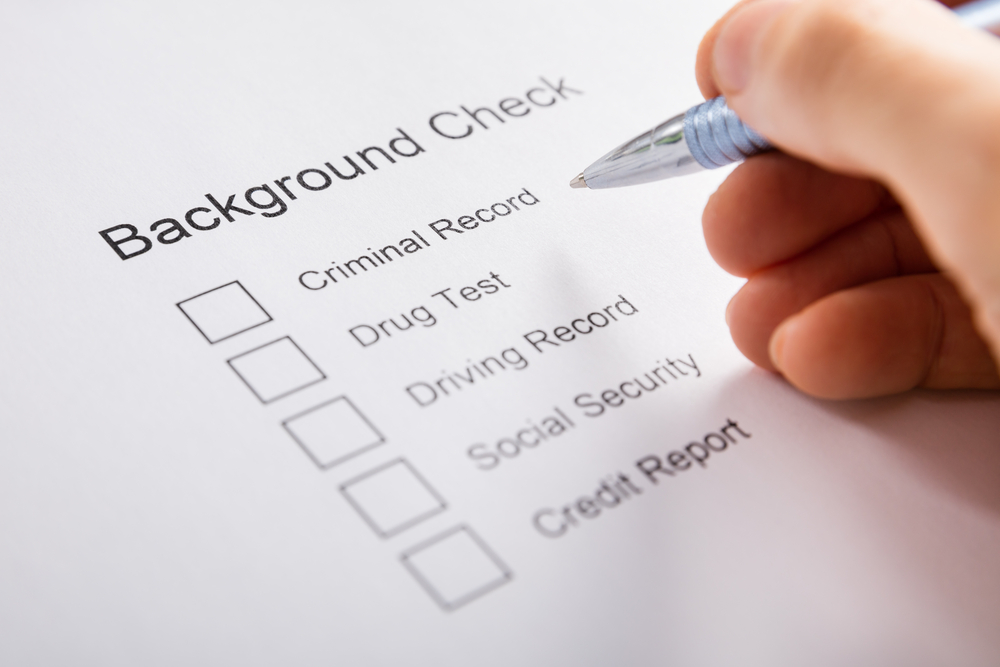
Why Is HR Scared of Social Media Background Checks?

We’ve talked to many HR professionals and Private Investigators who work with clients for employment purposes. What we hear most often is that they would love to include social and online research as part of their background check but are afraid to do so. They focus on what they hear in mainstream media – social media/online background checks are inviting a lawsuit, and companies don’t want to take a risk or be liable should a disgruntled candidate argue their case for discrimination, etc.

What many in the industry don’t know is that there are full on social media/online research services available, but those are not geared toward HR. In fact, there is a separate program designed specifically for pre-employment background checks.

This social/online research focuses on only negative content in relation to very specific topics, such as

  • Racist, Sexist, or Discriminatory Behavior
  • Sexually Explicit Material
  • Threats or Acts of Violence
  • Potentially Illegal Activity

It also complies with FCRA guidelines, which is critical. As HR professionals know, there are many aspects of an individual’s life that absolutely cannot be factored into the decision-making process, otherwise known as protected classes. Some examples include gender, marital status, religious affiliation, race, and parental status. It gets tricky because there are some factors that are state specific as far as not being allowed to be seen/considered as part of the hiring process. The laws can get further muddied for nationwide companies who are hiring outside of the state they are hiring employees in – at this point, which set of state specific laws apply?

Given all of the intricacies of pre-employment screening, it’s no wonder HR departments are very slow to adopt social media/online research as part of their decision-making process.

eChatter has developed a scan just for this industry/area of need. The pre-employment social/online research services take every factor into consideration to make sure that the clients we work for stay compliant on a federal and state level. Furthermore, we ensure that you never see what you shouldn’t see by redacting the information – the report turns up only relevant content that can be portrayed as negative and a detriment to the person’s employment with your company. When important content is identified, the report will only show those pieces of content. If nothing is found that falls into what can be legally obtained/considered when making hiring decisions, a “no pertinent information found” report is filed, meaning there is nothing of concern regarding the candidate.

With these protections in place, HR professionals can easily include social media and online content as part of their candidate screening. It’s as simple as filling out a form, providing as much information about an individual as in know – in the case of pre-employment scans, submitting the candidate’s resume is a great help – and letting eChatter take care of the rest, from conducting the research to keeping the layers of protection in place.

Want to know about using social/online content for pre-employment screening? Feel free to take a look at our website or send us an email for more information. We’re happy to answer any questions and show you how social/online research can be a valuable piece in the hiring process.

Think Your Data Is Private Because You’re Not on Social Media? Think Again.

Just because you’re not on Facebook or Twitter doesn’t mean your data is safe from social media or their clever algorithms. In two different studies, researchers found evidence that your privacy is no longer in your hands, even if you abstain from social media.

The studies, conducted at the University of Vermont and the University of Adelaide, found that they could predict a person’s posts on social media with 95% accuracy, even if they never had an account to begin with. The scientists got all the information they needed from a person’s friends, using posts from fewer than 10 contacts to build a mirror image of a person not even on the social network.  

The study, published Monday in the journal Nature Human Behavior, looked at more than 30 million public posts on Twitter (excluding retweets) from a total of 13,905 English-language users (attempting to eliminate bots and non-personal accounts) to populate their model. By using data provided by just 8 or 9 of a user’s contacts, the researchers were able to show that the tweets of friends allowed them to predict quite a bit about the original user. The original user’s Tweets allowed them to predict future tweets with an accuracy rate of roughly 64% and the user’s contacts gave them enough data to predict behavior with an accuracy rate of 61%. So, go ahead and delete your account, but information about you is still going to be generated (and pretty accurately) if you have a close relationship with at least 8 people who use the platform.

This analysis showed that “information within the Twitter messages from 8 or 9 of a person’s contacts make it possible to predict that person’s later tweets as accurately as if they were looking directly at that person’s own Twitter feed.”

“You alone don’t control your privacy on social media platforms,” University of Vermont professor Jim Bagrow said in a statement. “Your friends have a say too.” And even when you delete your social media accounts, if your friends are still there, tech giants are able to build profiles on you. This is already a concern that privacy advocates have about Facebook, called “shadow profiles.”

Now, there is a mathematical upper limit on how much predictive information a social network can hold. They can’t know everything about you, but they can know some things.

privacy in social media

So why is this information important? Businesses who want to sell you things or government agencies who want information about you can use this information to their benefit. Companies or agencies may not be able to find out your darkest secrets, but they can figure out things like your political or religious affiliation and products you might be interested in. The same things platforms like Facebook and Twitter know (and sell) about their users.

The researchers went on to acknowledge that their research “raises profound questions about the fundamental nature of privacy—and how, in a highly networked society, a person’s choices and identity are embedded in that network.”

“There’s no place to hide in a social network,” said 
co-author Lewis Mitchell.

Professor James Bagrow, also an author of the paper, confirmed: You alone don’t control your privacy on social media platforms. Your friends have a say too.

In April, Facebook CEO Mark Zuckerberg told lawmakers that the social network collected data on nonusers for “security purposes.” That includes people’s contact list when they use Facebook’s mobile app, which the company uses to suggest friend recommendations, it explained.

In response to the study, a Facebook spokeswoman said the company doesn’t build profiles on nonusers, even if it’s collecting data on them. “If you aren’t a Facebook user, we can’t identify you based on this information, or use it to learn who you are,” the company said in a statement.

The study shows there’s only so much you can control in terms of your own privacy and security online. As careful as you are online, the study suggests that you’re only as private as your friends have been.

Are Background Checks Failing Us?

All one has to do these days is turn on the local news to hear about another teacher, coach or employee being accused of a crime of either drugs or child sexual abuse. If you are like me, the first question you think of is, “Don’t they do background checks?” What we are starting to find out, is yes they do. The problem is with the way in which the background checks are being done and by whom.

Let’s start with the basics and the must haves. The FCRA, or the Fair Credit Reporting Act, was passed in 1970 to ensure regulations of the collection of credit information. Additionally, The Equal Employment Opportunity Commission   governs how this is to be done:

 In all cases, make sure that you’re treating everyone equally. It’s illegal to check the background of applicants and employees when that decision is based on a person’s race, national origin, color, sex, religion, disability, genetic information (including family medical history), or age (40 or older). For example, asking only people of a certain race about their financial histories or criminal records is evidence of discrimination.

Where the problem lies, in may cases, is with the actual agencies in which background companies receive their information. They may not be updated regularly enough. That in and of itself is a problem. But the list goes on…

background checks

You may be surprised to learn the following flaws:

  1. The FBI offers a National Criminal Information Center which is great, as long as the crime was reported to the FBI. Beginning in 1967, it is  dependent on records that have been provided by criminal justice agencies. It operates under a shared management concept between the FBI and federal, state, local and tribal criminal justice users.
  2. Many times education is not checked out thoroughly which can be very detrimental down the road. This includes professional licenses.
  3. They often don’t utilize the information from paid data bases.
  4. Social Media is rarely included. I don’t mean the prospective employee gives up passwords.  That should not ever be done in my opinion, however much can be gleaned by conducting a deep web investigation, without that information. A social media background check may reveal quite a lot about the character of the individual. Many HR execs are looking anyway, however hiring an agency is the safest way to go. A best practice is to never review your candidates’ social media profiles internally. This is beneficial because an agency’s review and social media report respect your candidate’s privacy and alleviates your employees from reviewing content that could lead to accusations of discrimination or violations of freedoms.


The Pros and Cons of Social Media Background Checks

You are in the process of interviewing candidates for a position and you have narrowed it down to your top 3. Typically you conduct background checks by calling references and verifying previous employment. But in today’s world where everything revolves around social media, it’s no surprise that Human Resources departments are turning to social media platforms to check their candidates’ backgrounds before making any hiring decisions.

Let’s take a look at the Pros and Cons of conducting social media background checks:

Advantages

1. Easy Background Check

Social media screening is a cheap way for a background check, the employer can access them anywhere they are and can make an immediate decision of hiring the candidate. It saves a lot of time to learn about the candidate through Facebook and LinkedIn profiles and does not require any additional money to be spent. Facebook posts are an easy insight into the candidate’s day to day life; Twitter is good to learn about how opinionated they are or about their personal thoughts. On the other hand, LinkedIn is good to learn about their professional makeup. With so many aspects available on the web, it is easy to know about the candidate in a complete way.

2. Eliminating Discrepancies

Social media background checks are a good way to confirm information on a candidate’s resume. Social media sites often provide information on the user’s previous occupations and work history. You can compare to see if there are any discrepancies in the resume they submit for the open position. A candidate may also claim to be an expert in a specific subject matter or have participated in certain volunteering efforts. Most of this information can be confirmed online on their social media platforms.

3. You Learn Who Your Candidate Really Is

Why do people tend to be more open and vulnerable on social media? Whether on Facebook, Instagram, or Twitter, users often let their guard down and are completely honest. Whatever the reason, this can prove to be beneficial to HR because few candidates feel free to truly be themselves in such a formal and high-pressure environment. During the job interview the candidate tends to put up the best foot in every aspect, hence, it does not provide the complete picture as to how a candidate will behave on a day to day basis at work.

But looking at online profiles can tell you what someone is passionate about or how they treat other people. It can also help you spot red flags. Does your candidate have a habit of ranting about her boss and colleagues online? Does an applicant who seemed friendly in the interview crack racist or sexist jokes on Twitter?

The information revealed by a social media background check is rarely essential to the hiring process, but in some cases, it can help you spot major red flags about a person’s character. Respect for others is always the main agenda for an employer that they look in a candidate and this information can easily be found in social media space. Someone who badmouths a company or spouts off derogatory remarks online is not a good ambassador for your brand and is probably someone you want to pass over when you are hiring.


Disadvantages

  1. Legal Risks

While your social media background screening may seem innocent and purely professional, you could be exposed to potential legal risks in terms of privacy and human rights should your background screening methods be used against you. The legal risks may arise from the public information you gathered about the candidate.

For example, a candidate might list his age, race, religion, or sexual orientation as part of a Facebook profile. Whether you want to admit it or not, subconsciously learning this information about an applicant may affect how you feel about them. Hiring managers are at full liberty to have their own opinions about sensitive political, religious, and lifestyle matters, however, the second those opinions influence a hiring decision, they become discrimination.

  1. Privacy Settings

Most social media sites allow users to adjust the privacy settings on their profiles. Smart candidates are more careful with what they post online. With this knowledge, candidates can easily create a social media profile that works to their advantage and HR has no choice but to accept what can be seen publicly as the truth. Be mindful that what you see is not always what you get.

  1. You Might End Up Wasting Time

One of the biggest problems with social media background checks is that it’s unpredictable. Finding people on Facebook, Twitter, or LinkedIn can be a challenge if you don’t share any connections or mutual friends. And even if you do find your candidate, privacy settings on social platforms can make it impossible to view their posts. Social media background checks can end up being a lot of work for potentially no return.

Conclusion

If you’re thinking about browsing the social media profiles of your top candidates, you need to consider both arguments before deciding.

Always run other types of background checks regardless of your position on social media background checks. Social media can tell you more about a person – from general likes and dislikes to character details – but it can’t replace traditional and trusted background check sources such as criminal screenings and employment verification checks.

If you ever decide to use a candidate’s social media profile for hiring purposes – whether to find contact information or to run a full-blown social media background examination – have someone other than the hiring manager do the work. Looking at a Facebook page can unintentionally reveal too much information – as such, it’s a good idea to have a person uninvolved with the hiring manager look through the applicant’s social accounts and prepare a report of relevant or potentially relevant information. This person can act as a filter, keeping information that might create a bias out of the hands of the hiring manager.


About Us:

We have been mining social media since 2007 for our clients. By utilizing best in class software programs, we offer a service called eChatter.

eChatter works with you to obtain your objectives in a fast, accurate and reliable facet. By keeping our strengthened principals, yet evolving with this industry, we lead in social media monitoring. Since 2007, we have been dedicated to providing our customers with the most authentic data.


We offer:

·       Deep Web Scans

·       Jury Vetting

·       Jury Monitoring

·       Quick Scan


www.e-chatter.net

(866) 703-8238