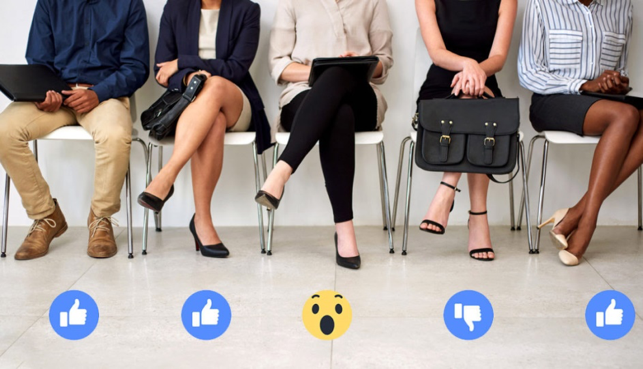
You are in the process of interviewing candidates for a position and you have narrowed it down to your top 3. Typically you conduct background checks by calling references and verifying previous employment. But in today’s world where everything revolves around social media, it’s no surprise that Human Resources departments are turning to social media platforms to check their candidates’ backgrounds before making any hiring decisions.
Let’s take a look at the Pros and Cons of conducting social media background checks:
Advantages
1. Easy Background Check
Social media screening is a cheap way for a background check, the employer can access them anywhere they are and can make an immediate decision of hiring the candidate. It saves a lot of time to learn about the candidate through Facebook and LinkedIn profiles and does not require any additional money to be spent. Facebook posts are an easy insight into the candidate’s day to day life; Twitter is good to learn about how opinionated they are or about their personal thoughts. On the other hand, LinkedIn is good to learn about their professional makeup. With so many aspects available on the web, it is easy to know about the candidate in a complete way.
2. Eliminating Discrepancies
Social media background checks are a good way to confirm information on a candidate’s resume. Social media sites often provide information on the user’s previous occupations and work history. You can compare to see if there are any discrepancies in the resume they submit for the open position. A candidate may also claim to be an expert in a specific subject matter or have participated in certain volunteering efforts. Most of this information can be confirmed online on their social media platforms.
3. You Learn Who Your Candidate Really Is
Why do people tend to be more open and vulnerable on social media? Whether on Facebook, Instagram, or Twitter, users often let their guard down and are completely honest. Whatever the reason, this can prove to be beneficial to HR because few candidates feel free to truly be themselves in such a formal and high-pressure environment. During the job interview the candidate tends to put up the best foot in every aspect, hence, it does not provide the complete picture as to how a candidate will behave on a day to day basis at work.
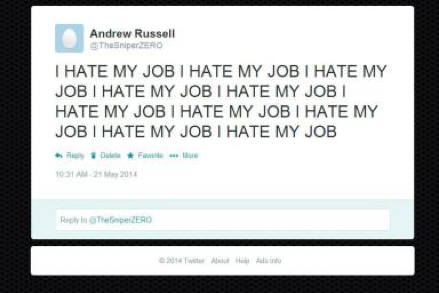
But looking at online profiles can tell you what someone is passionate about or how they treat other people. It can also help you spot red flags. Does your candidate have a habit of ranting about her boss and colleagues online? Does an applicant who seemed friendly in the interview crack racist or sexist jokes on Twitter?
The information revealed by a social media background check is rarely essential to the hiring process, but in some cases, it can help you spot major red flags about a person’s character. Respect for others is always the main agenda for an employer that they look in a candidate and this information can easily be found in social media space. Someone who badmouths a company or spouts off derogatory remarks online is not a good ambassador for your brand and is probably someone you want to pass over when you are hiring.
Disadvantages
- Legal Risks
While your social media background screening may seem innocent and purely professional, you could be exposed to potential legal risks in terms of privacy and human rights should your background screening methods be used against you. The legal risks may arise from the public information you gathered about the candidate.
For example, a candidate might list his age, race, religion, or sexual orientation as part of a Facebook profile. Whether you want to admit it or not, subconsciously learning this information about an applicant may affect how you feel about them. Hiring managers are at full liberty to have their own opinions about sensitive political, religious, and lifestyle matters, however, the second those opinions influence a hiring decision, they become discrimination.
- Privacy Settings
Most social media sites allow users to adjust the privacy settings on their profiles. Smart candidates are more careful with what they post online. With this knowledge, candidates can easily create a social media profile that works to their advantage and HR has no choice but to accept what can be seen publicly as the truth. Be mindful that what you see is not always what you get.
- You Might End Up Wasting Time
One of the biggest problems with social media background checks is that it’s unpredictable. Finding people on Facebook, Twitter, or LinkedIn can be a challenge if you don’t share any connections or mutual friends. And even if you do find your candidate, privacy settings on social platforms can make it impossible to view their posts. Social media background checks can end up being a lot of work for potentially no return.
Conclusion
If you’re thinking about browsing the social media profiles of your top candidates, you need to consider both arguments before deciding.
Always run other types of background checks regardless of your position on social media background checks. Social media can tell you more about a person – from general likes and dislikes to character details – but it can’t replace traditional and trusted background check sources such as criminal screenings and employment verification checks.
If you ever decide to use a candidate’s social media profile for hiring purposes – whether to find contact information or to run a full-blown social media background examination – have someone other than the hiring manager do the work. Looking at a Facebook page can unintentionally reveal too much information – as such, it’s a good idea to have a person uninvolved with the hiring manager look through the applicant’s social accounts and prepare a report of relevant or potentially relevant information. This person can act as a filter, keeping information that might create a bias out of the hands of the hiring manager.
|
About Us: We have been mining social media since 2007 for our clients. By utilizing best in class software programs, we offer a service called eChatter. eChatter works with you to obtain your objectives in a fast, accurate and reliable facet. By keeping our strengthened principals, yet evolving with this industry, we lead in social media monitoring. Since 2007, we have been dedicated to providing our customers with the most authentic data.
We offer: · Deep Web Scans · Jury Vetting · Jury Monitoring · Quick Scan
(866) 703-8238 |